

If you’re trying to figure out how to pose for engagement photos because you’re already convinced the two of you are going to look awkward, you’re in very good company. Maybe one of you hates having photos taken, you have no idea what to do with your hands, or every pose you’ve saved suddenly feels impossible to recreate without feeling stiff. None of that means you need to practice before your session.
As a Boston engagement photographer, I’m not expecting you to arrive knowing how to pose. I’ll give you enough direction to help you settle in, then pay attention to the way you naturally move and interact once you stop thinking so much about the camera. My job is to notice the little things from my side so you can spend less time wondering whether you’re doing it right.
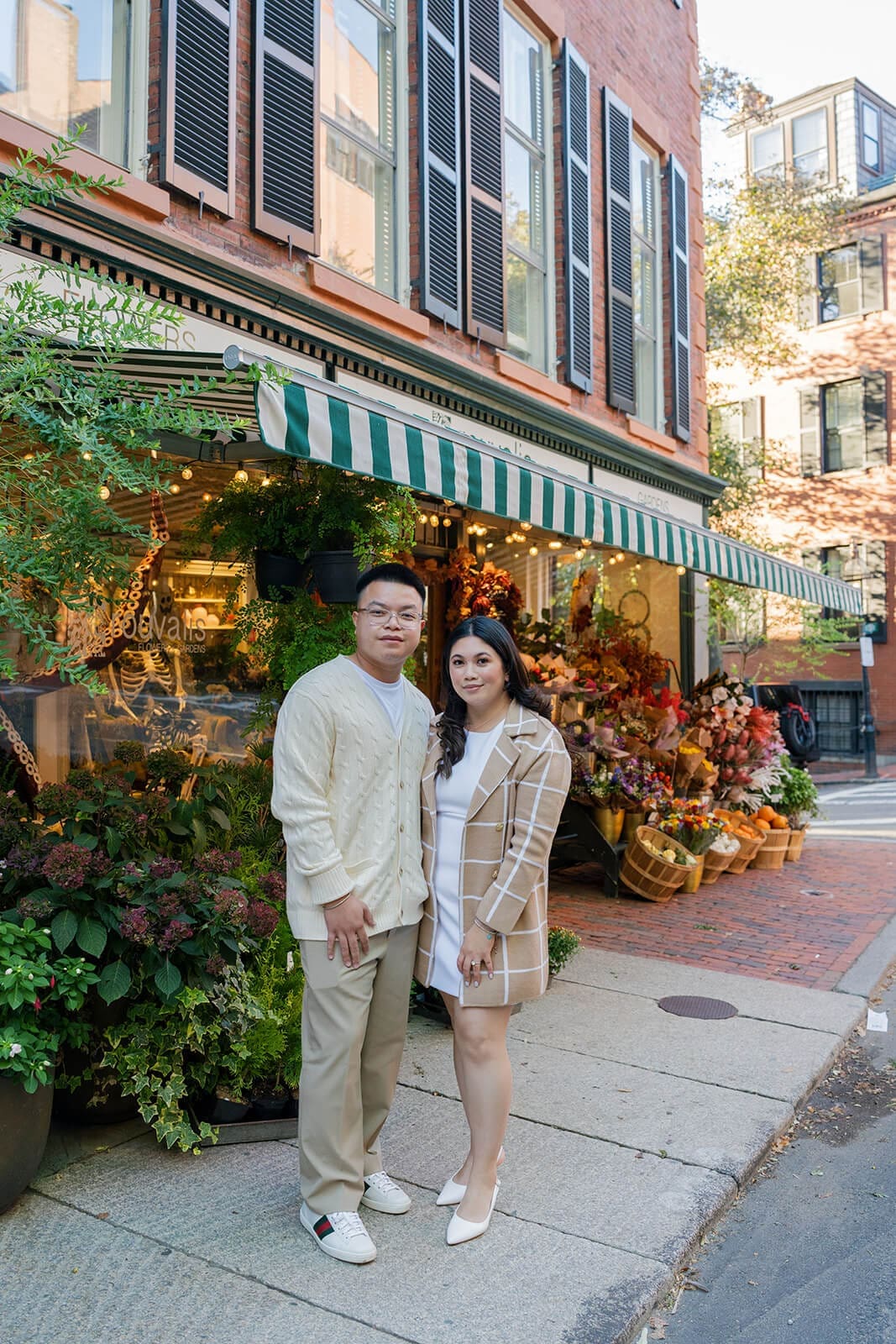
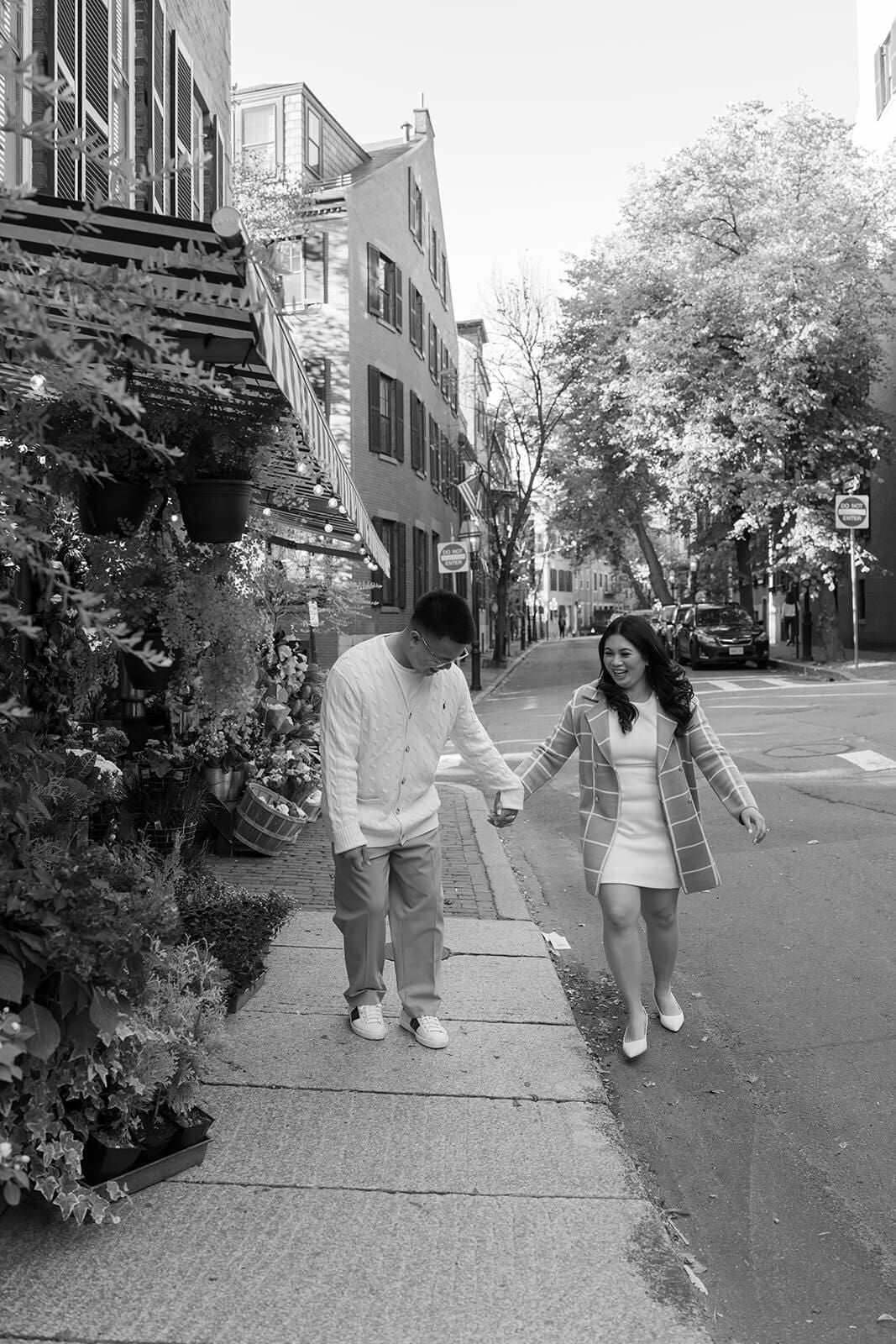
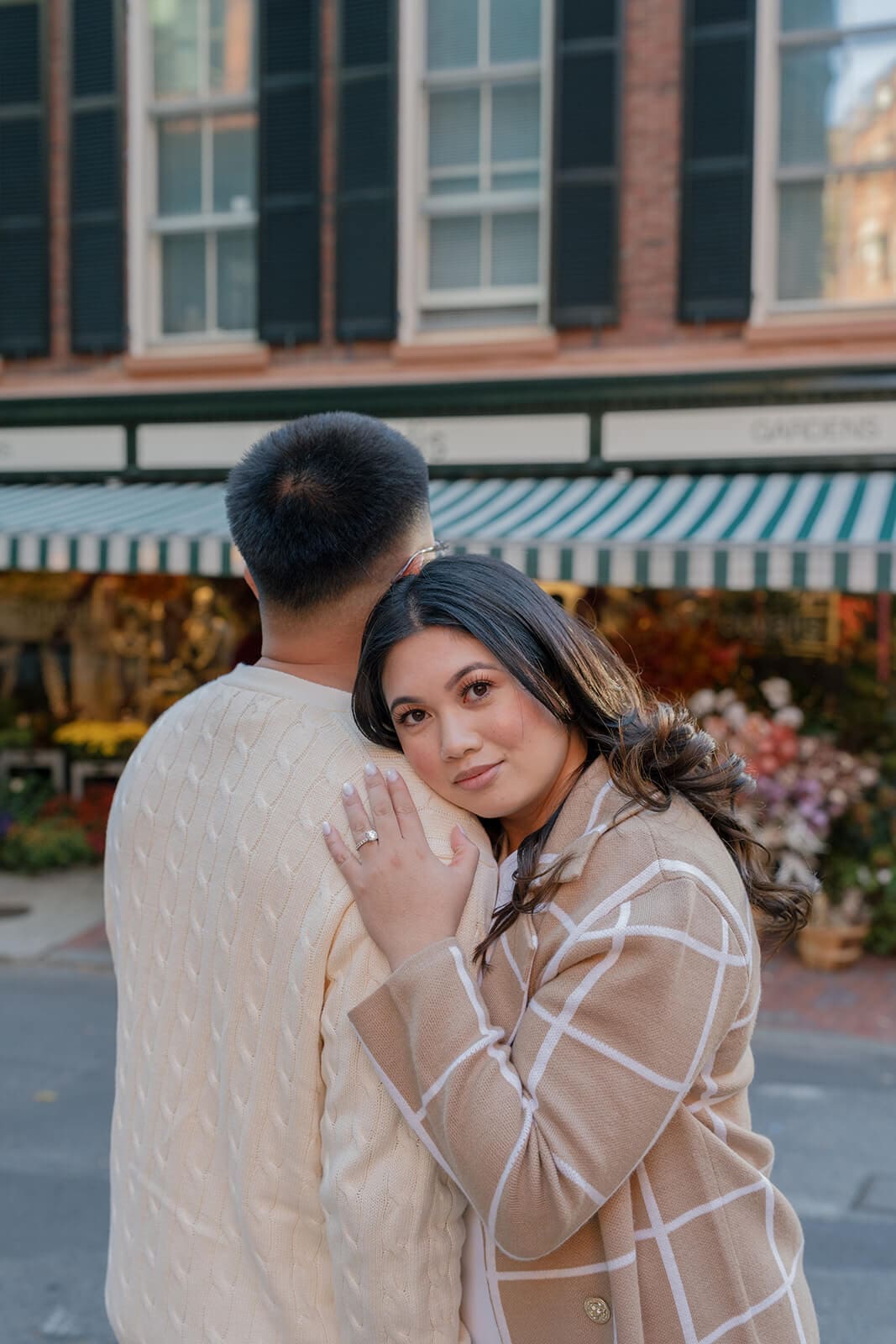
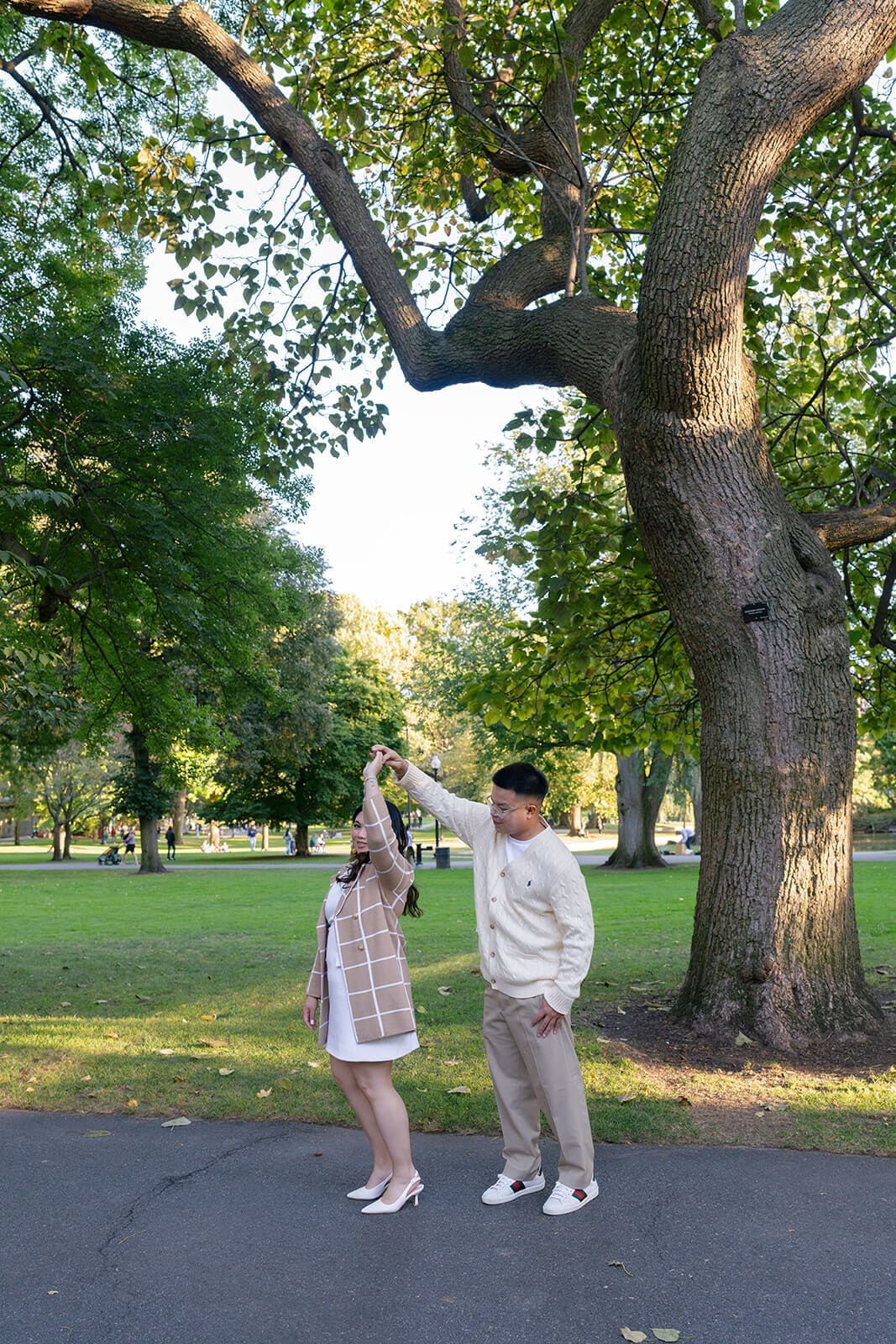
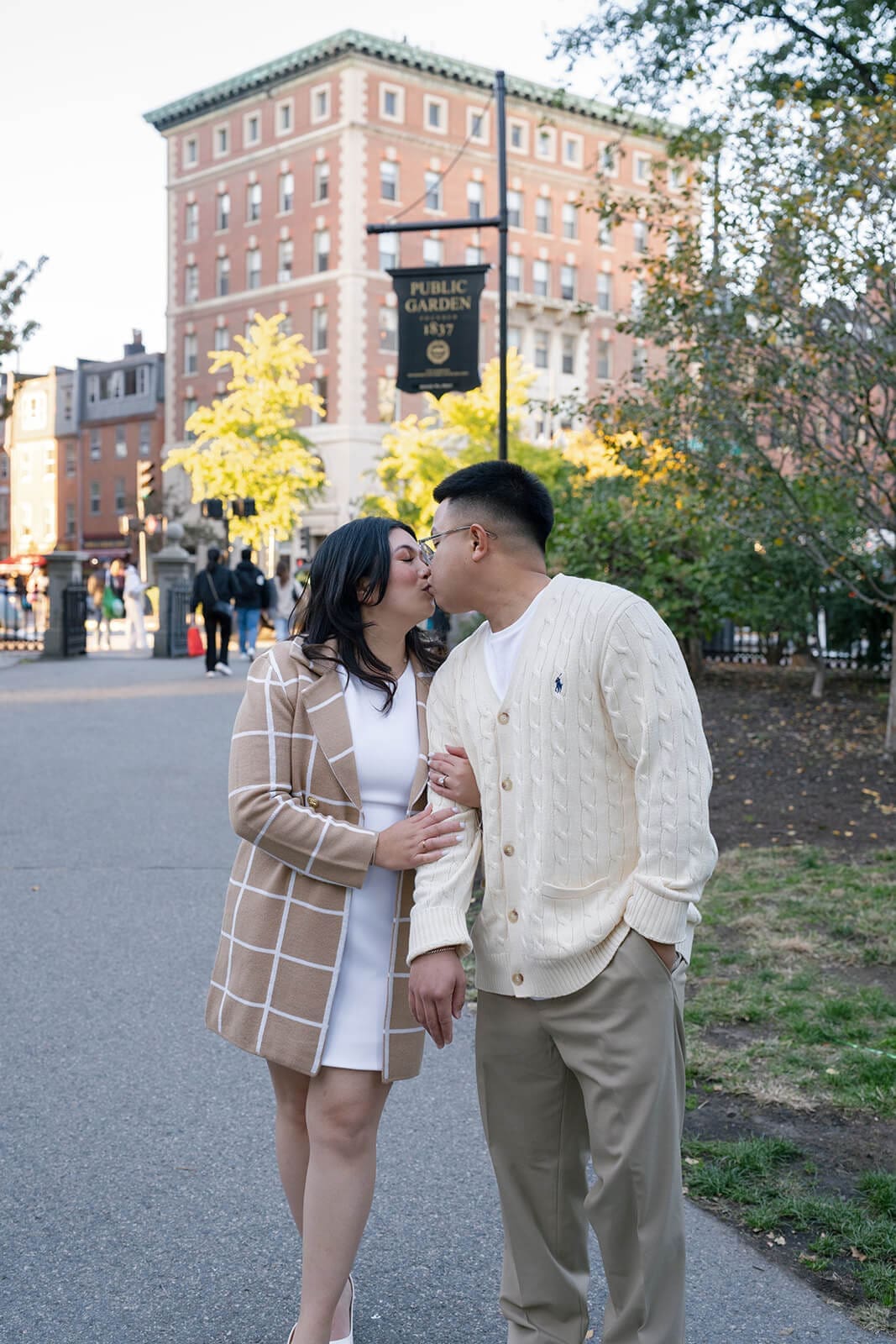
Documentary Photography Doesn’t Mean Zero Direction
Documentary photography doesn’t mean I’m going to stand back and wait for you to magically wander into perfect light. During engagement sessions and wedding portraits, I’m still paying attention to where I place you, how the light is falling, and whether a little direction would help you feel more comfortable.
I’ll usually give you a clear place to start, then watch what happens once you settle into it. Maybe you naturally lean closer while you’re talking or one of you reaches for the other without thinking about it. Those are the moments I want to leave room for. If something starts to feel stiff or the light changes, I can step back in and make a small adjustment. Otherwise, I’d rather let the two of you stay with each other than keep interrupting something that’s already working.
Prompting vs. Posing: What’s the Difference?
When couples ask me how to pose, I usually explain that posing and prompting do two different jobs during a session. A pose gives us a comfortable place to start. A prompt gives you something to respond to once you’re there, which is often where I start seeing more of the way the two of you naturally interact.
I might place you somewhere because I like the light or show you how I want you standing together. From there, I could ask you to walk toward me while staying close, pull each other in a little tighter, whisper something ridiculous to your partner, or keep talking while you move together. I’m not looking for you to perform the prompt perfectly. Most of the time, I’m more interested in what happens right after it, when one of you laughs or reacts in a way I never could have posed.
I use both throughout a session because sometimes clear direction helps you settle in, while other moments need a little more room. Once I can see that something is working, I’d rather follow what the two of you are already giving me than keep arranging every movement.
Use Movement When You Start Feeling Stiff
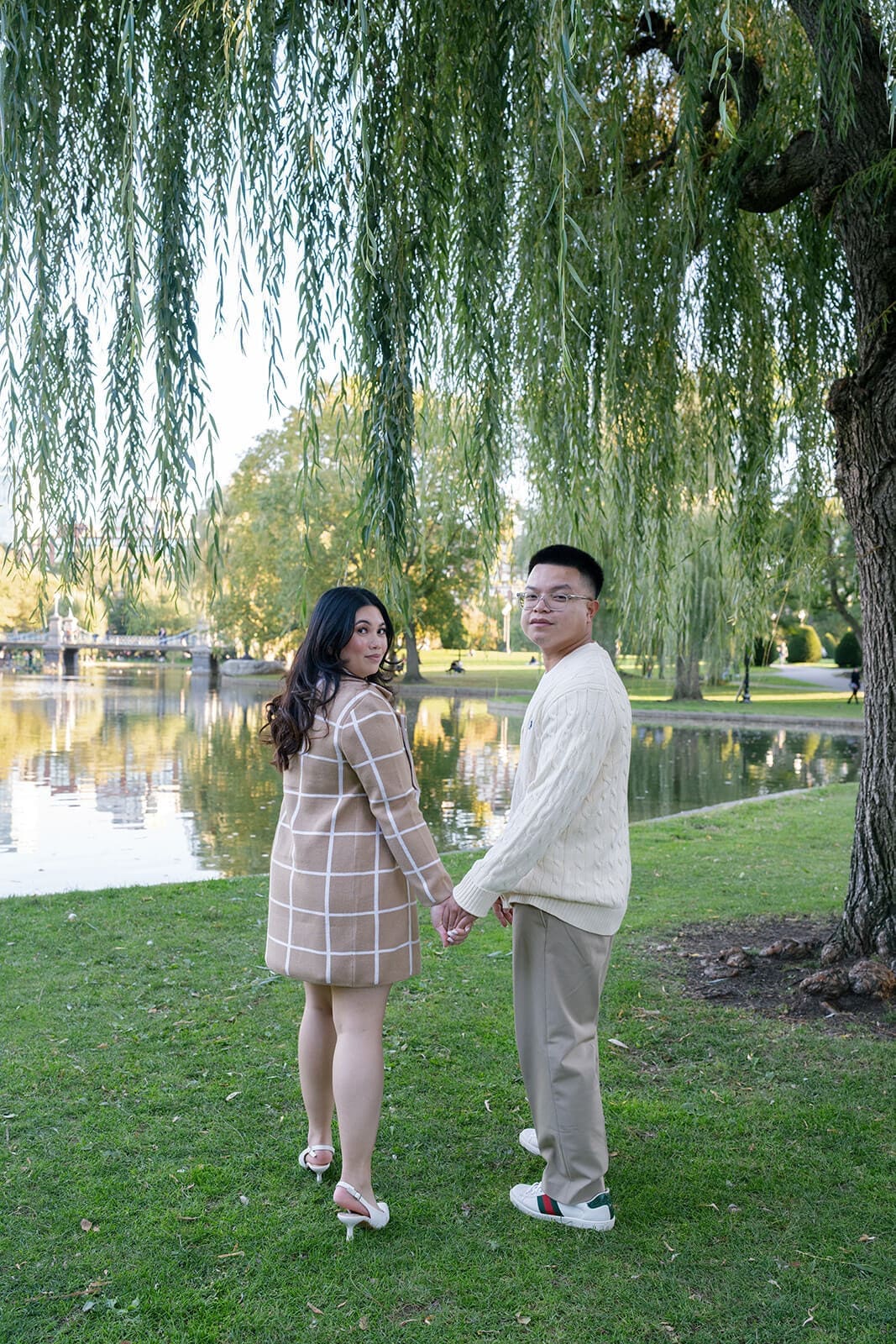
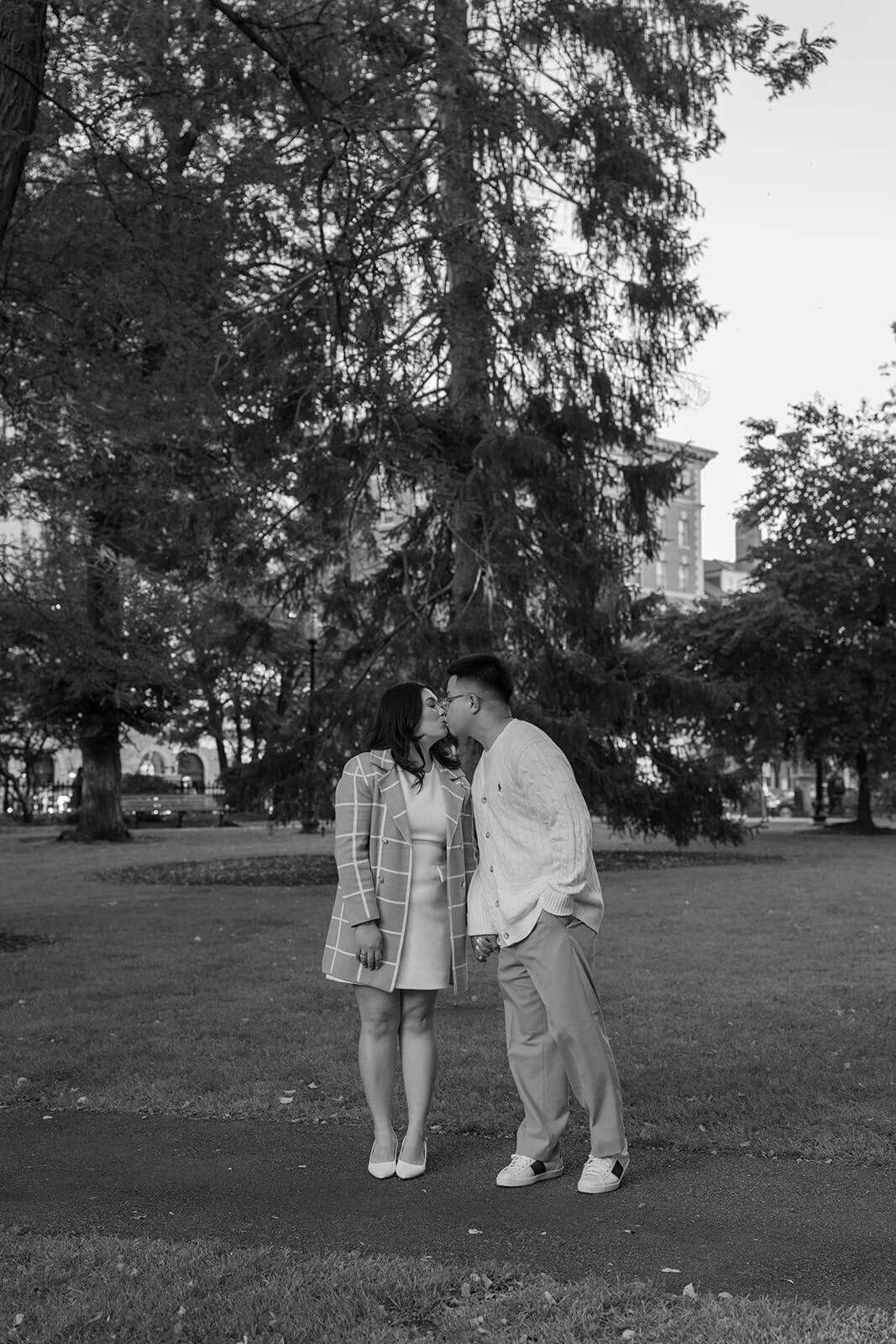
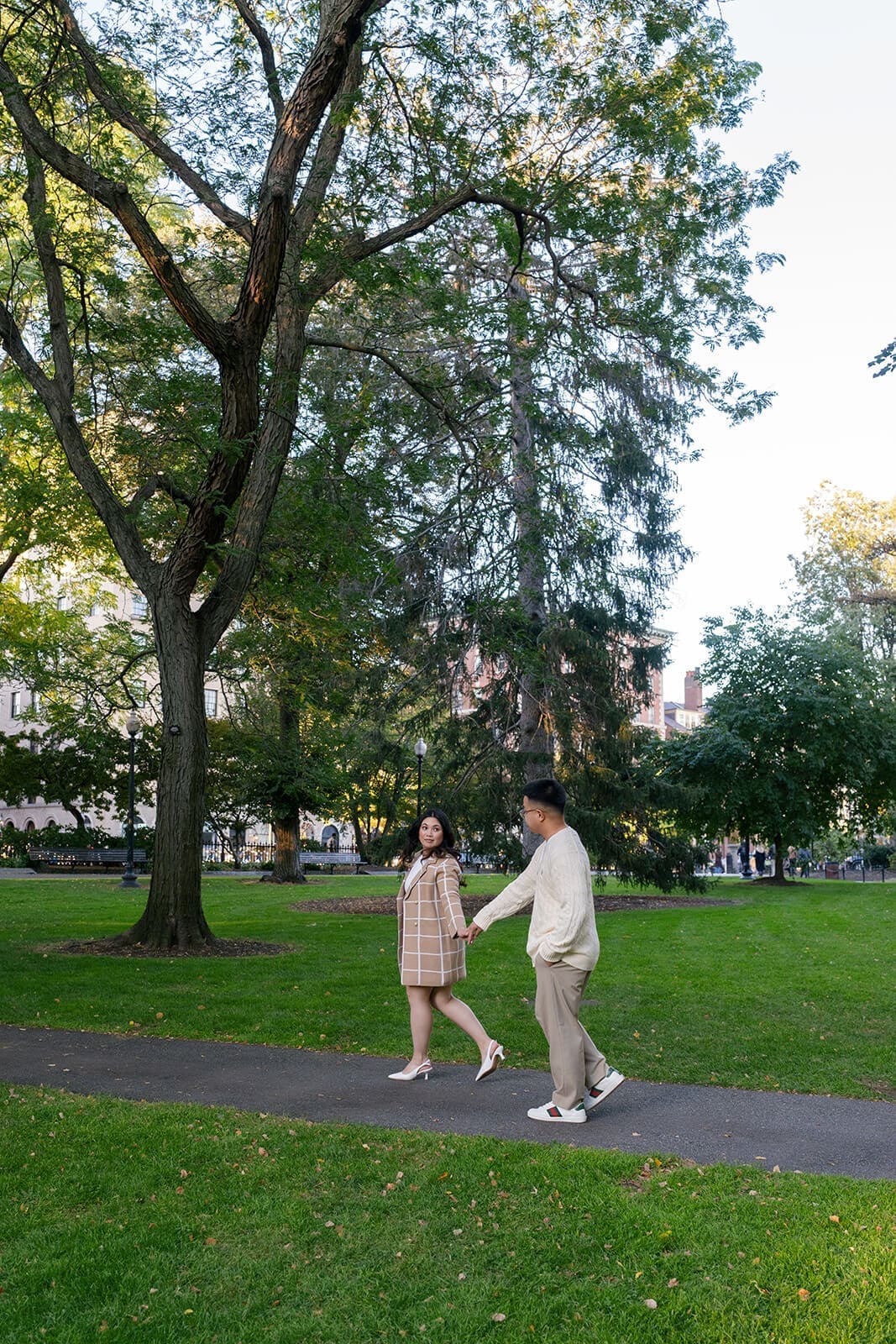
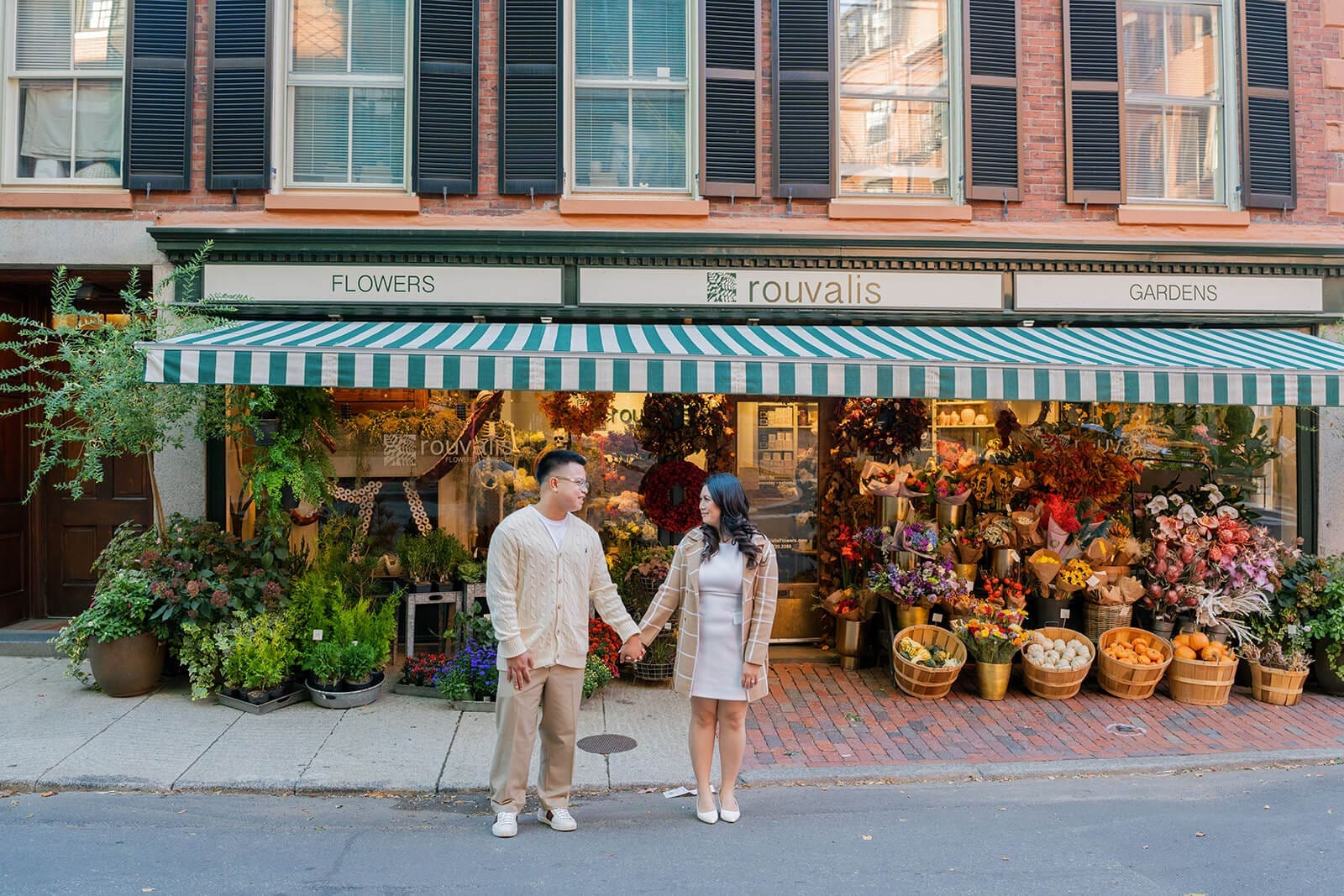
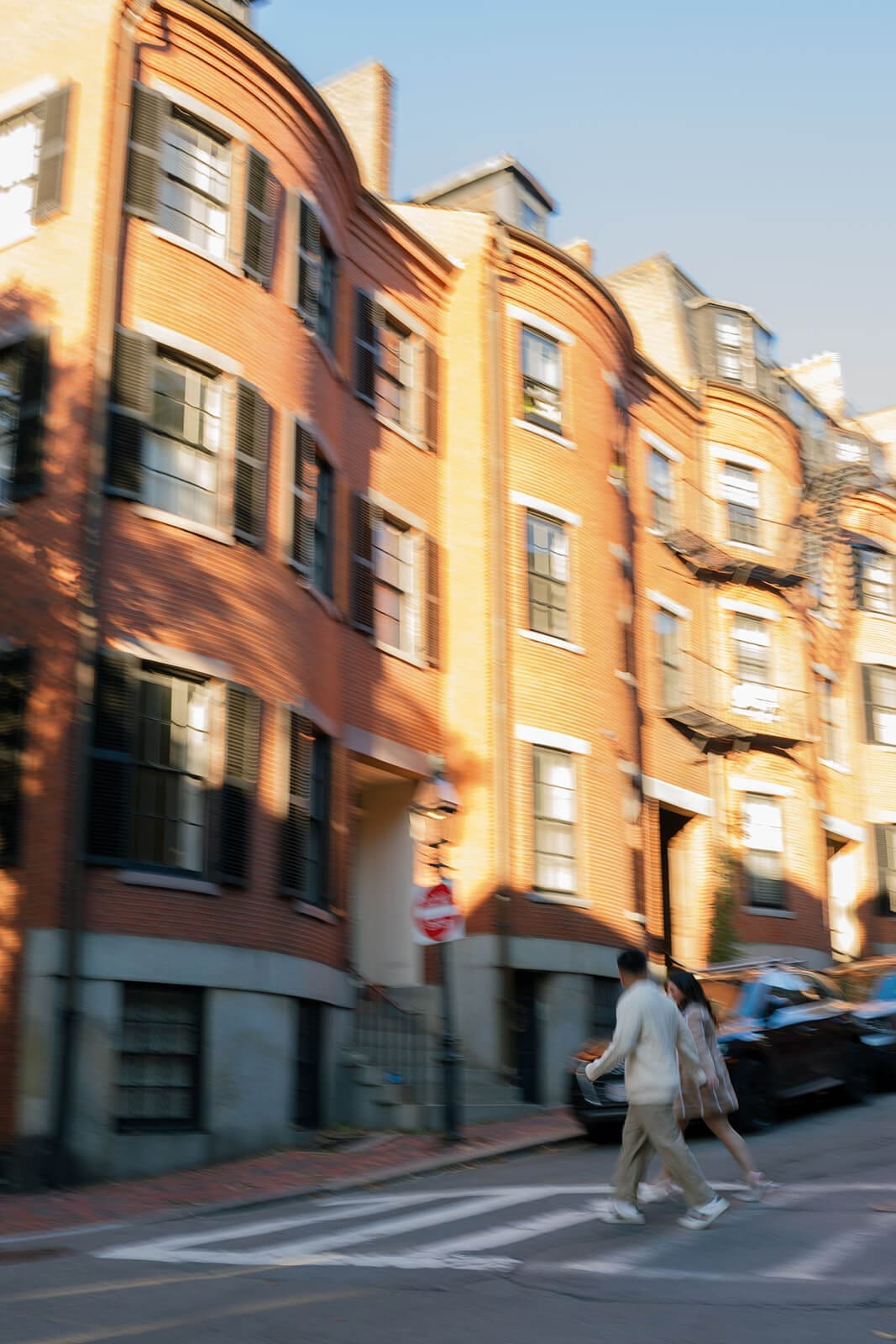
Movement is one of my favorite posing tools because standing still can make you very aware of every part of your body. The second you start thinking about whether your shoulders look right or what your arms are doing, even a simple pose can start feeling like a lot. Giving you something to do takes some of that pressure off.
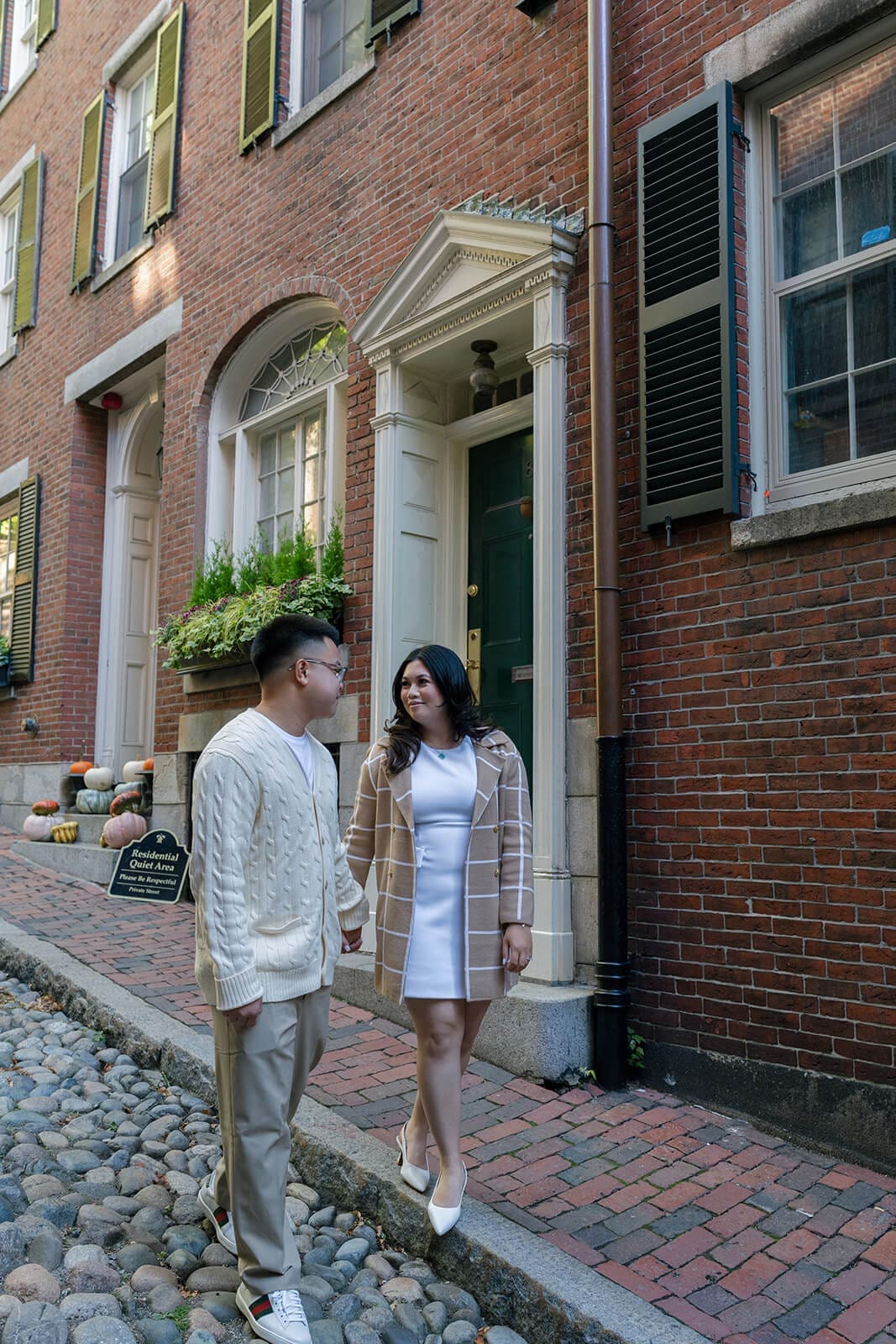
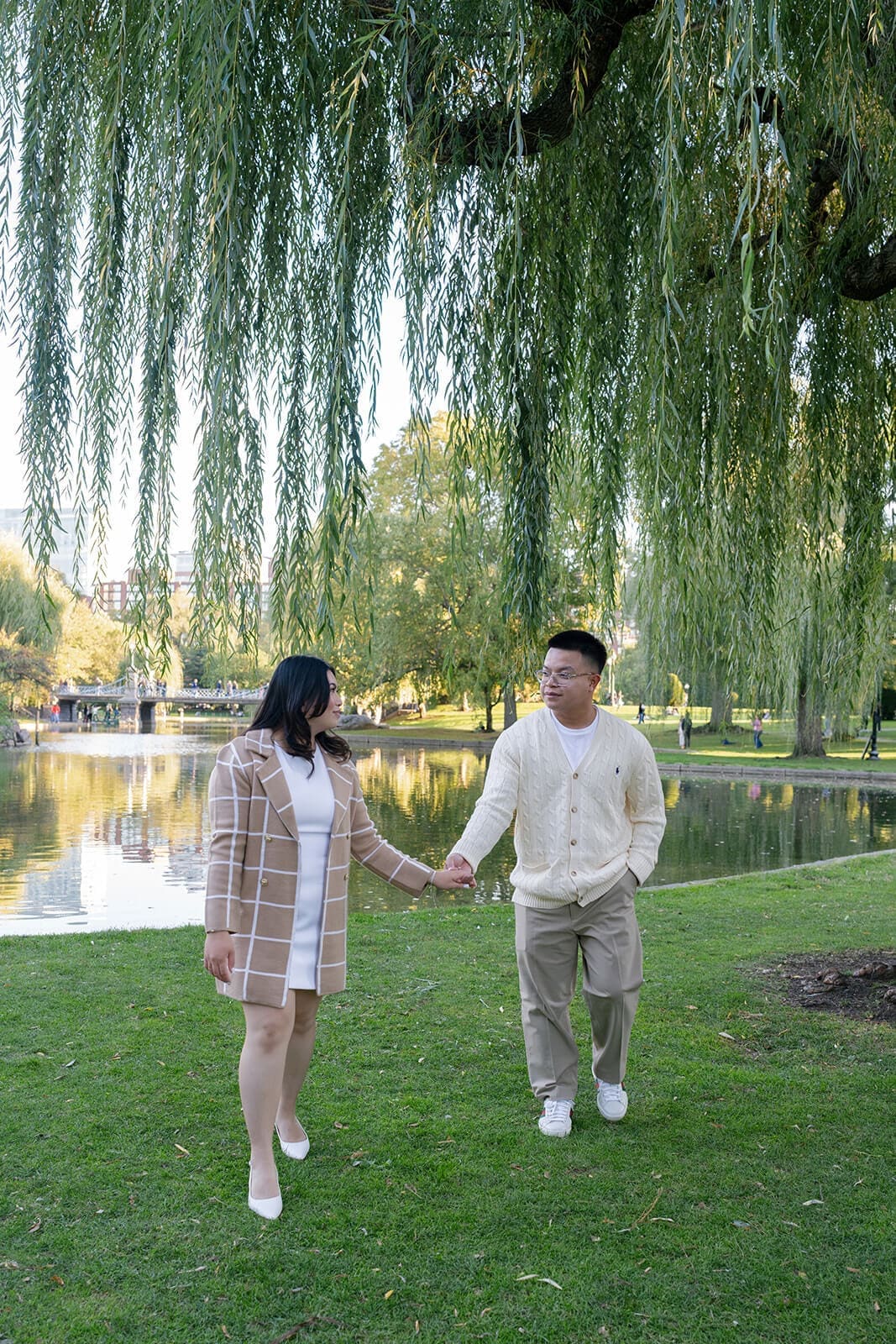
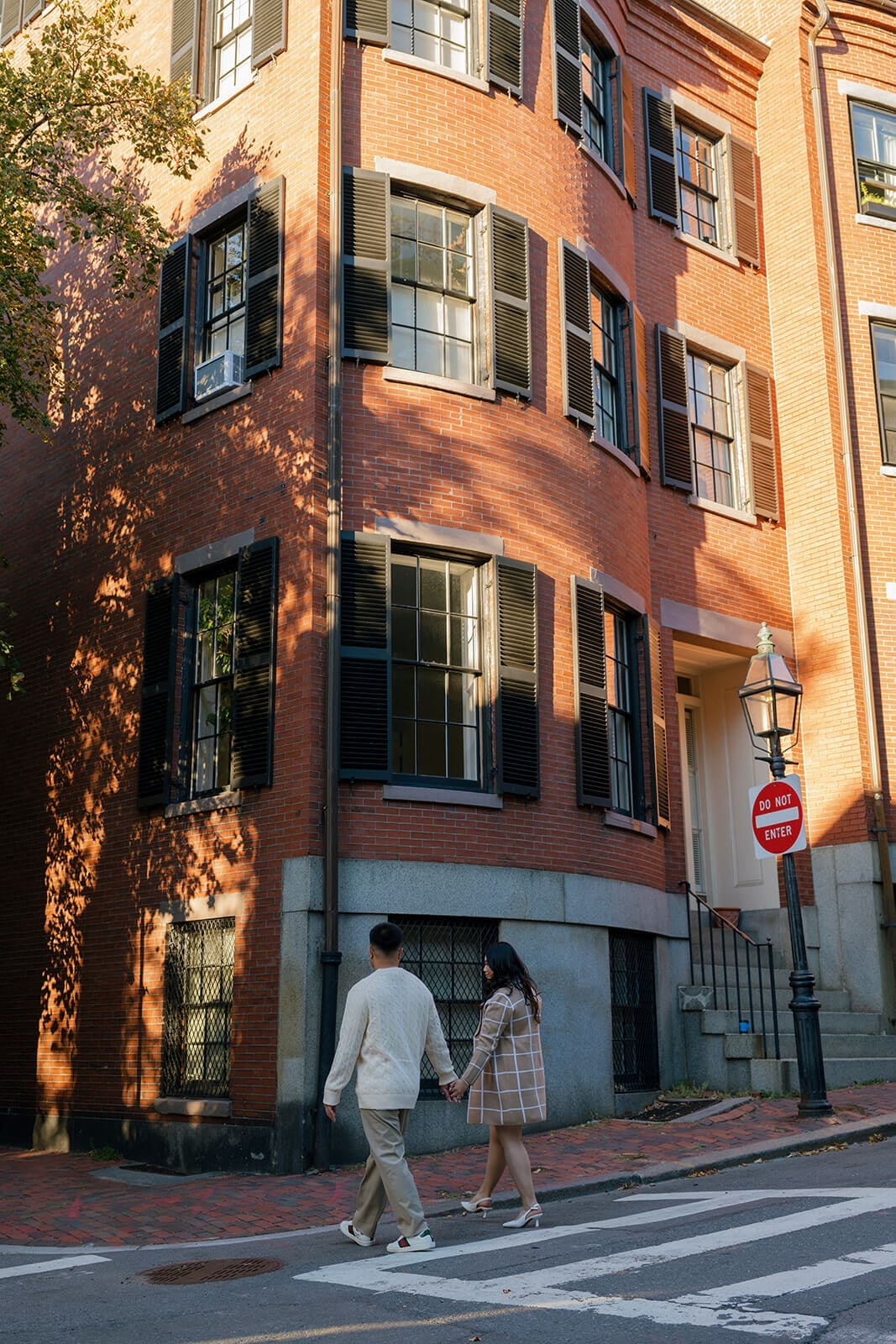
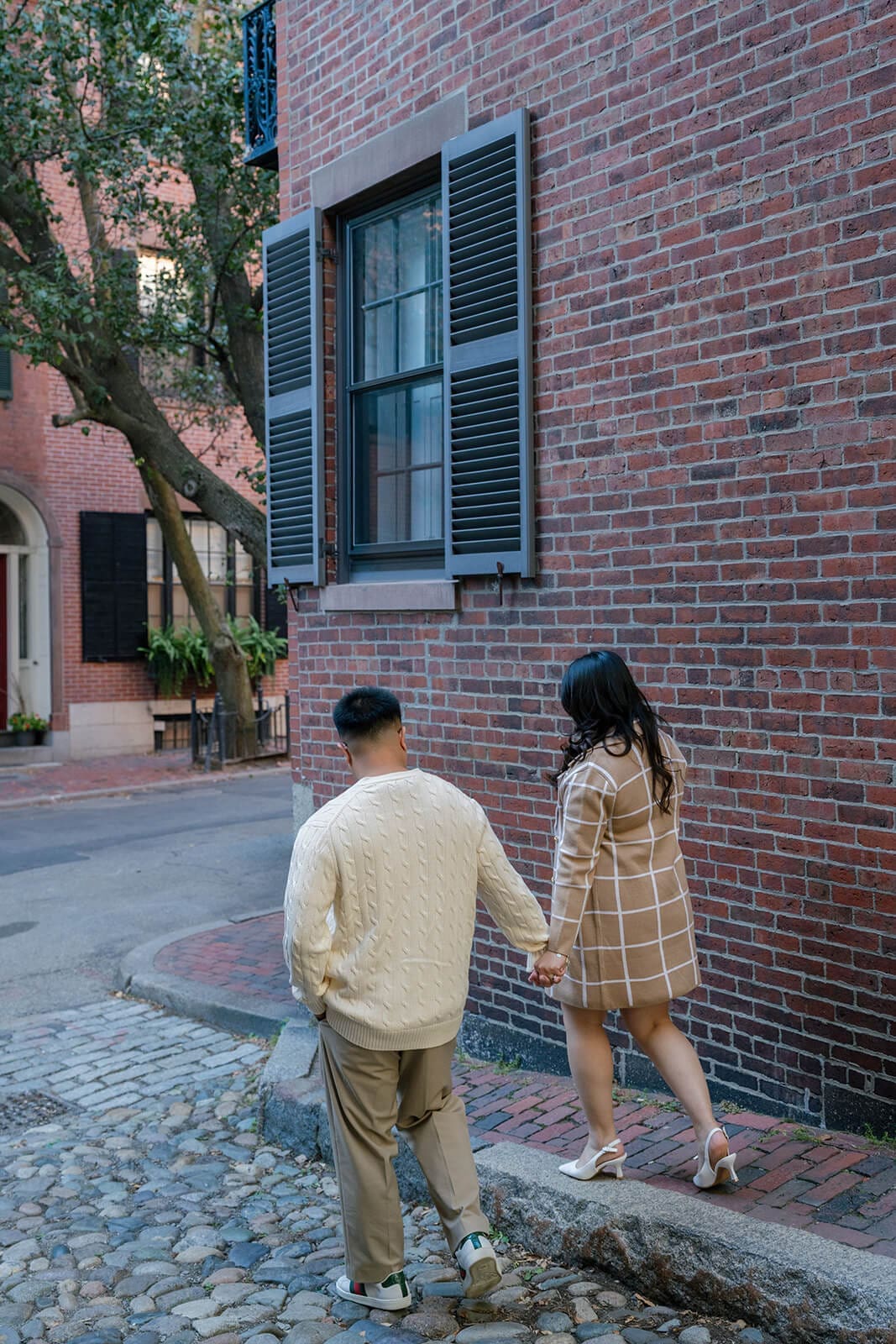
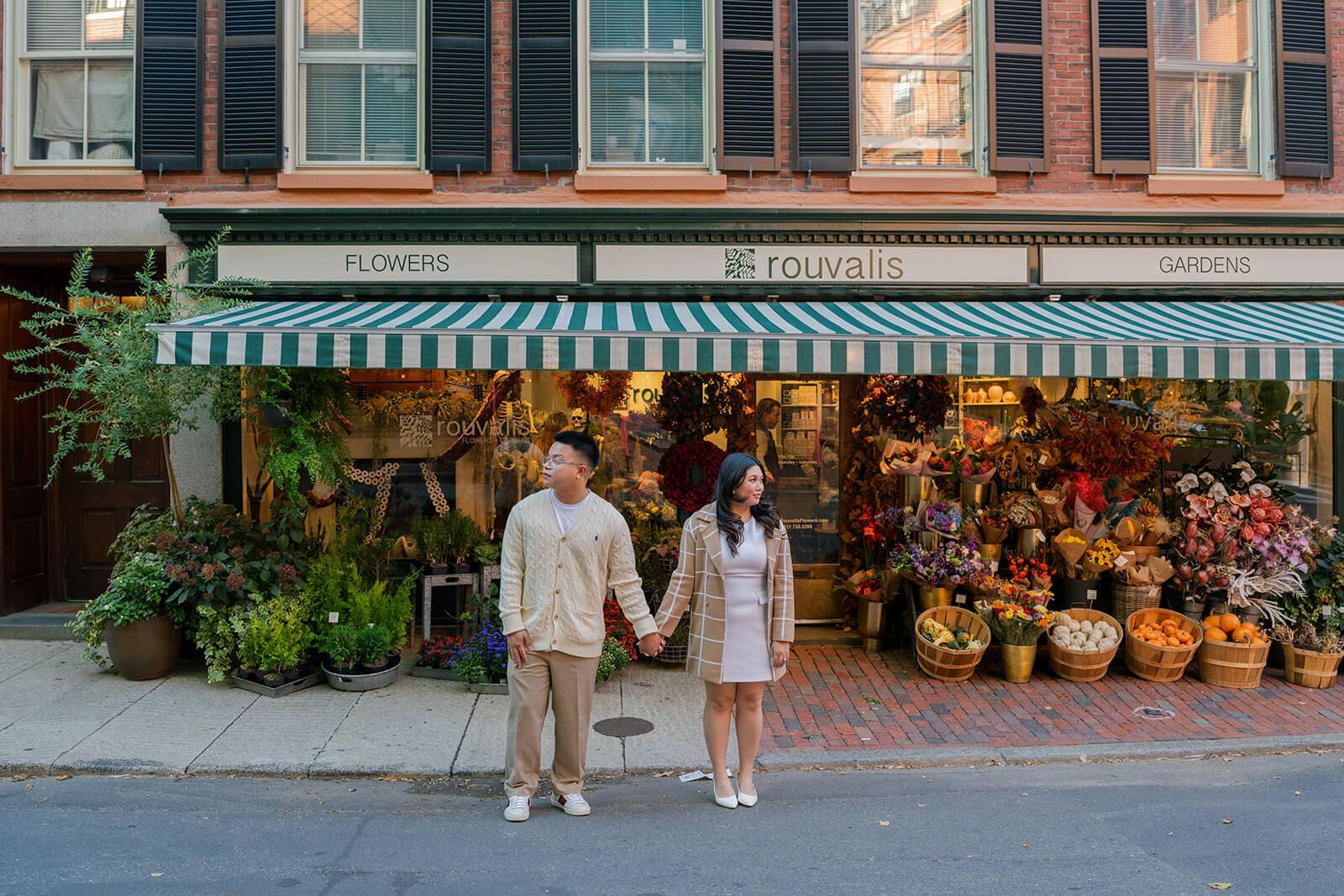
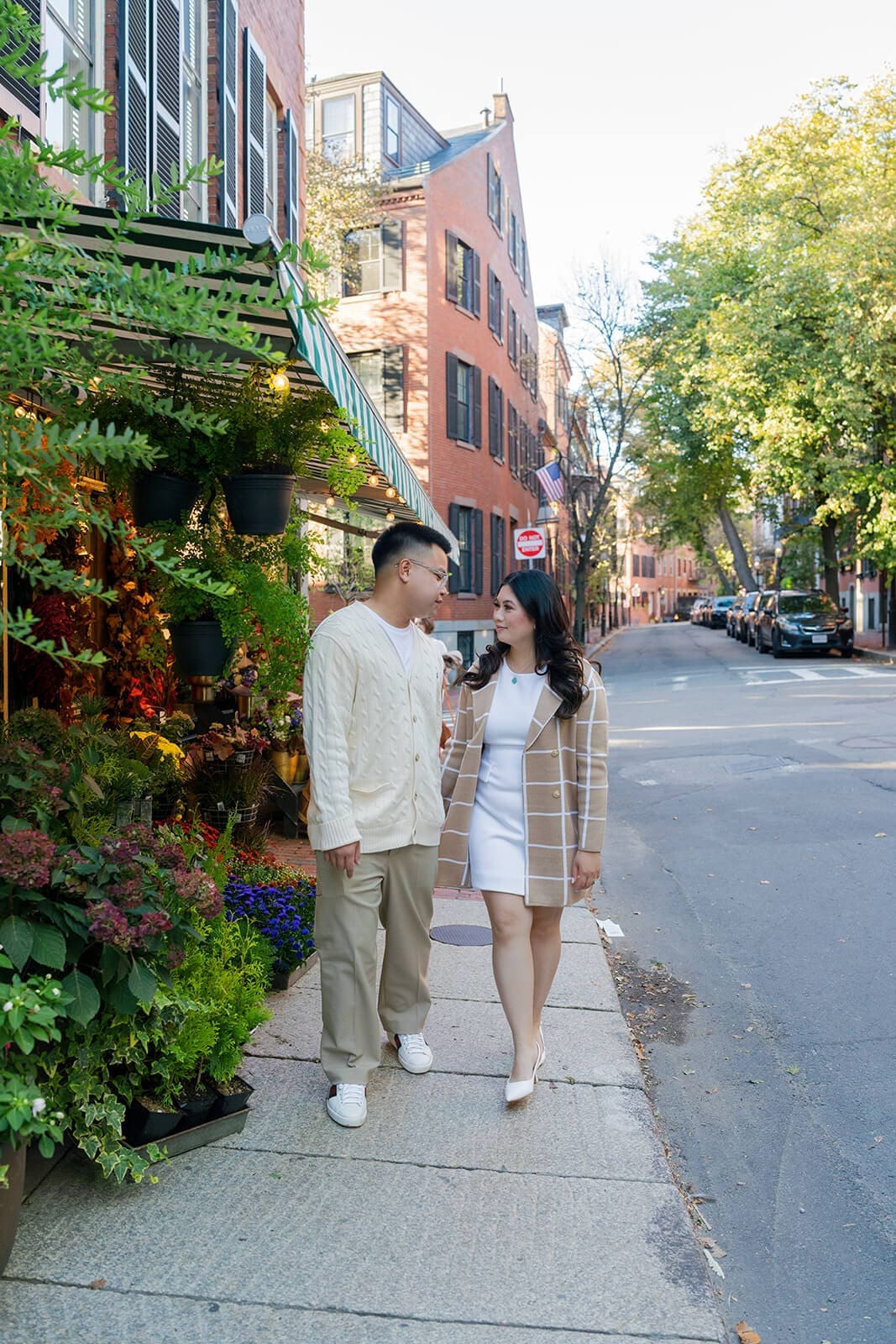
I might ask you to walk together, change positions while staying close, or respond to a prompt that keeps you from freezing in one spot. The point isn’t to create constant motion for the sake of it. I’m giving your body somewhere to go so you can spend less time holding a pose and more time paying attention to each other. We can always slow things down again once you’re feeling more comfortable.
Why My Background in Dance Shapes the Way I Photograph
My background in dance has a lot to do with the way I photograph movement. I notice the small things pretty quickly, like when one of you shifts your weight because you’re finally starting to relax or when the two of you naturally fall into step without thinking about it. I can also usually tell when a movement feels easy versus when someone is very clearly wondering what they’re supposed to be doing with their body.
I’m not trying to choreograph your entire session. That awareness just helps me know when something already has a natural rhythm and when one small adjustment could make it feel more comfortable. Once I can see that the two of you are settling into each other, I’m happy to give you more space and photograph what happens from there.
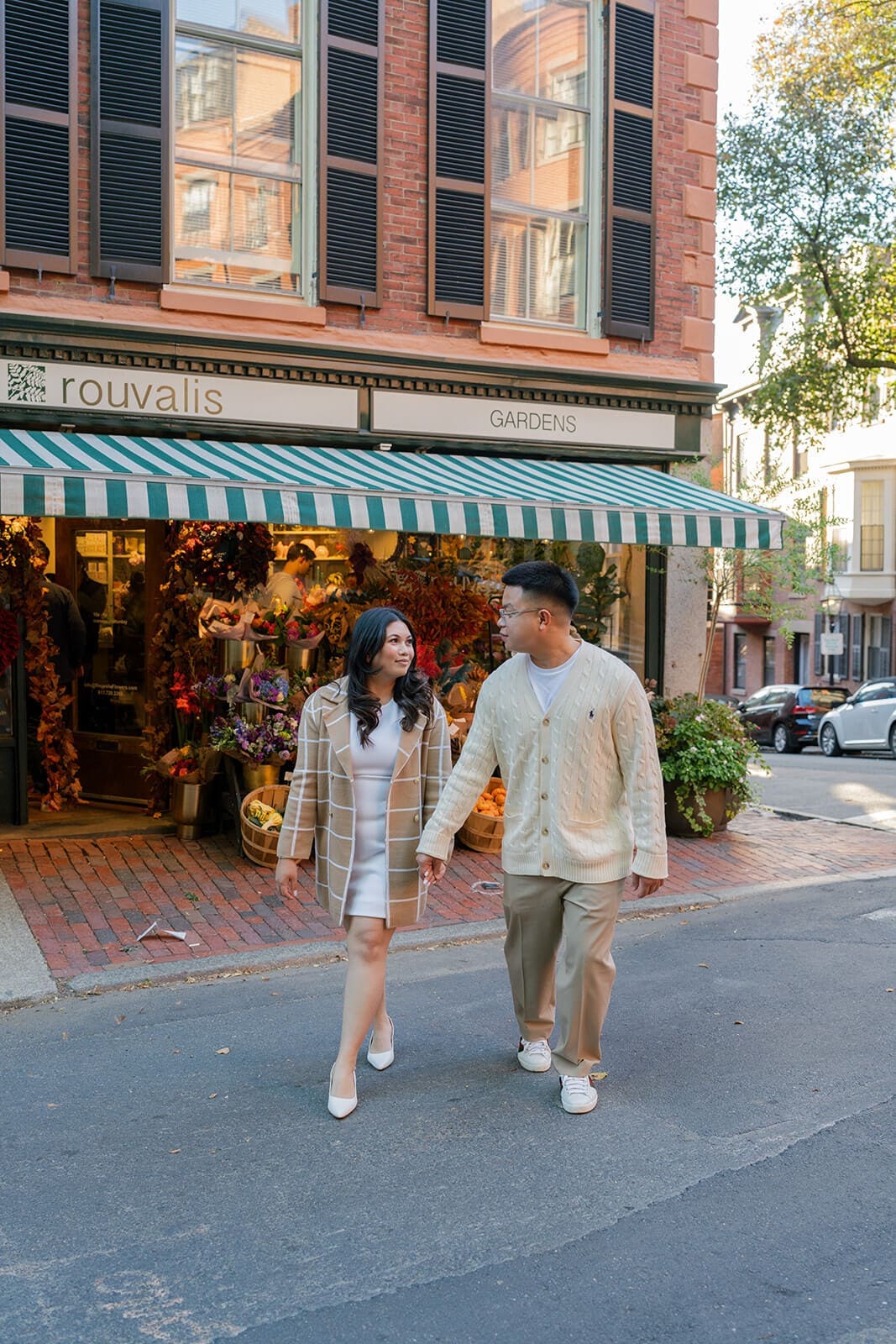
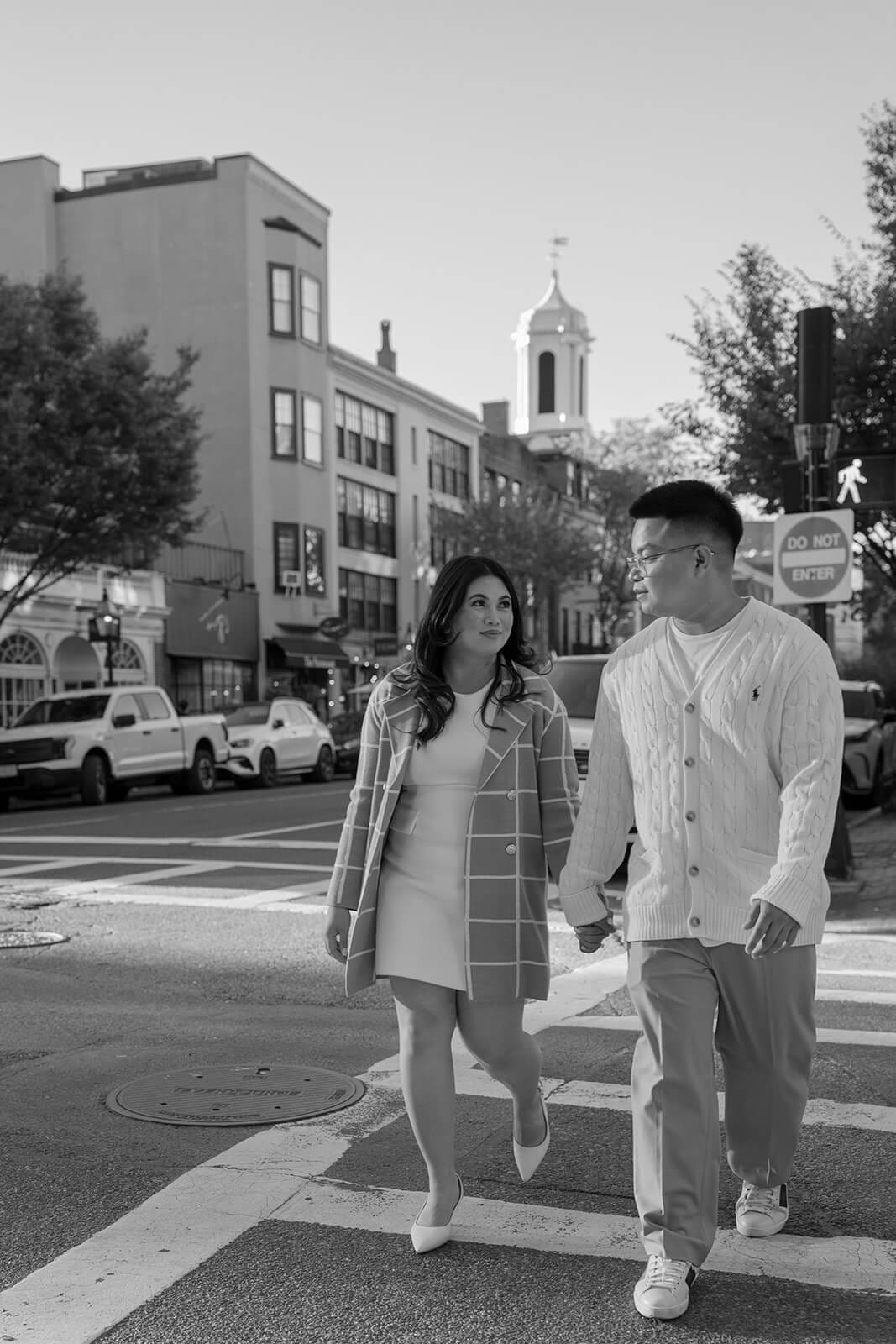
What Do I Do With My Hands?
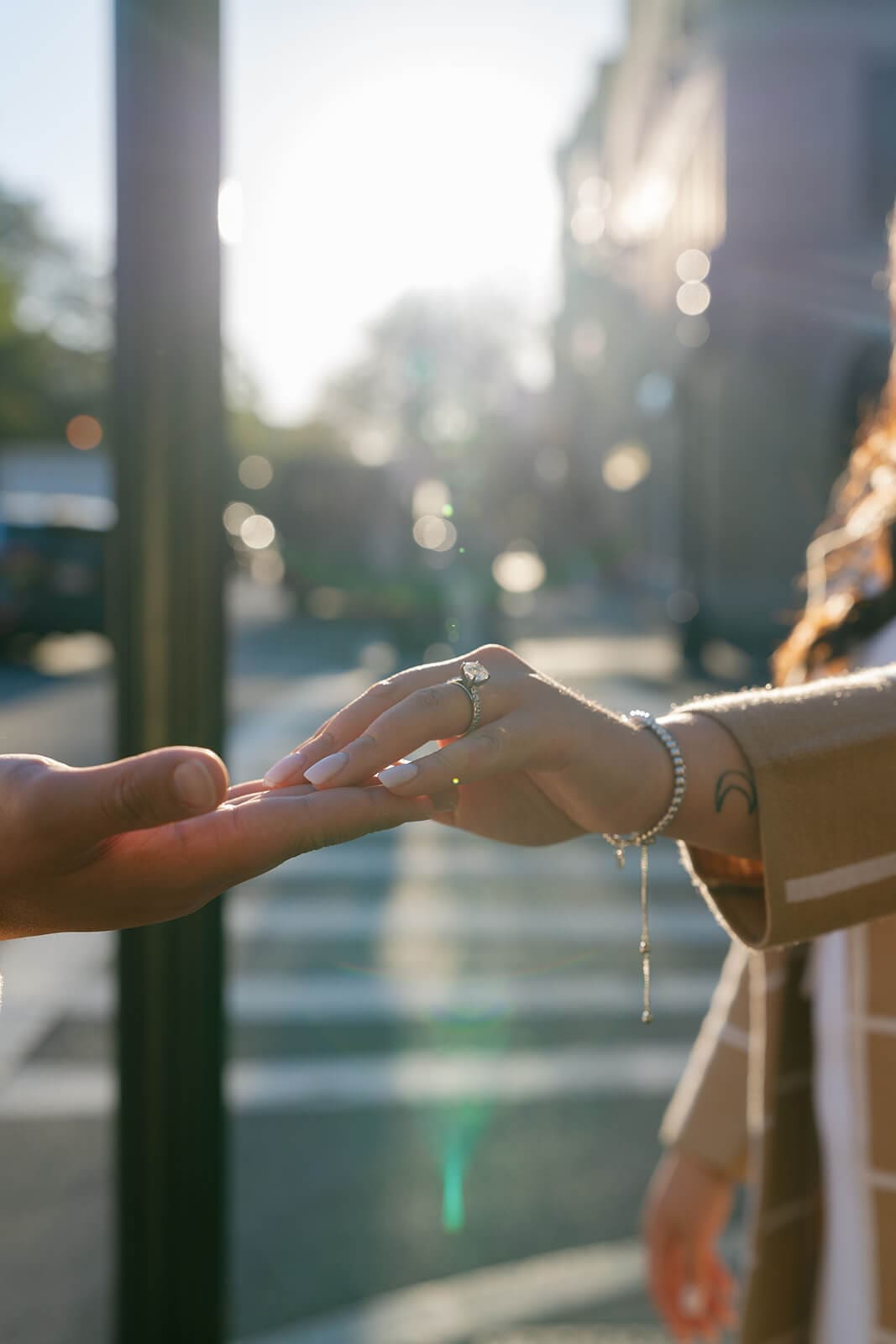
It’s funny how quickly you can become aware of your hands once there’s a camera pointed at you. If you’re already thinking about how to pose, suddenly your arms can feel like these extra limbs you’ve never had to think about before.
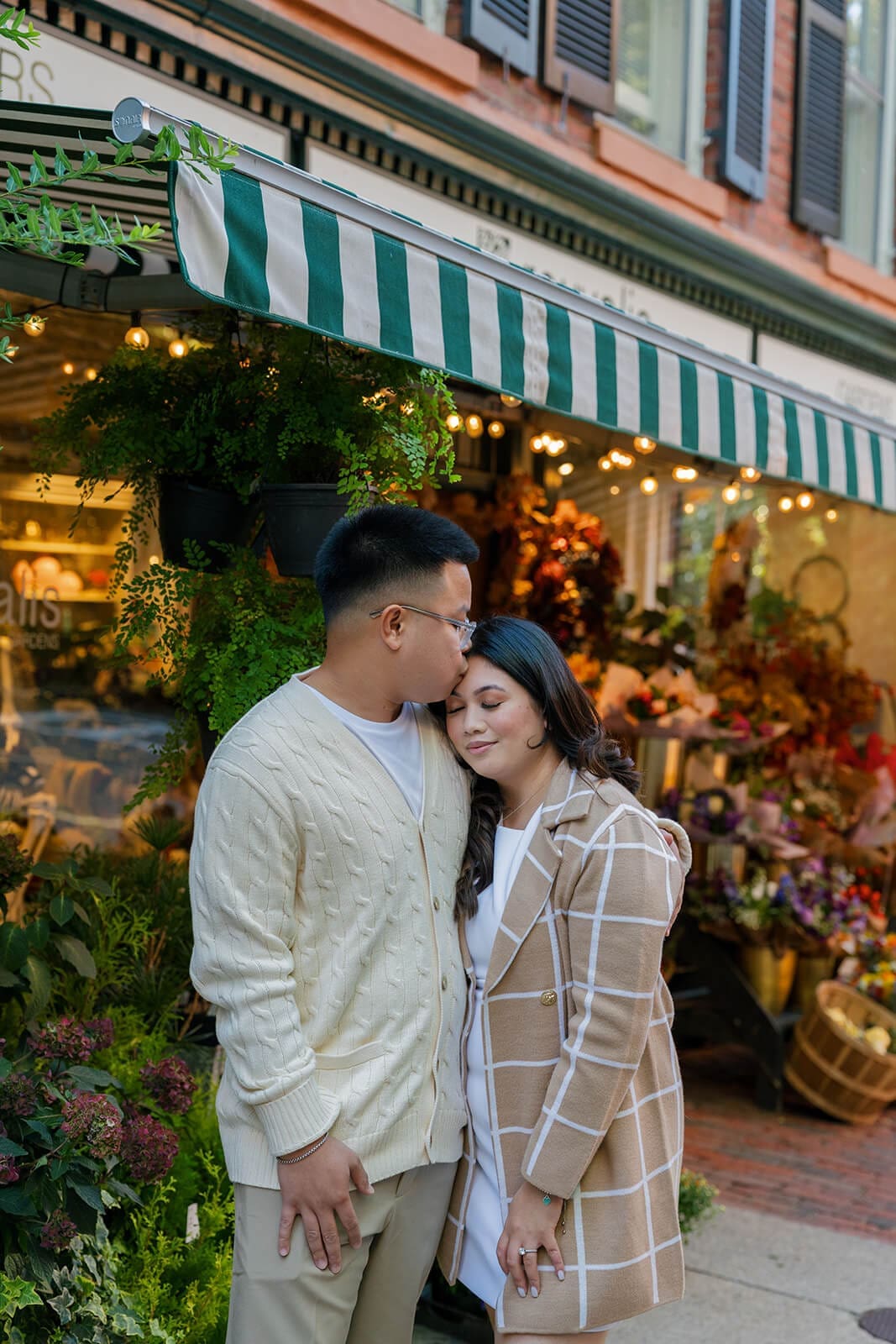
I’ll work your hands into whatever we’re already doing so they have somewhere natural to land. If you’re standing close together, I might have you reach for your partner or rest your hand on their arm instead of giving your hand its own very important job. From there, I’m watching for the smaller things you probably won’t notice, like when your fingers start to straighten because you’re concentrating or when a hand that felt relaxed a second ago suddenly looks tense.
Those are easy adjustments for me to make from my side of the camera. I’ll fix what needs fixing and keep us moving so your attention can stay with each other instead of becoming a running inventory of where every finger is supposed to go.
How to Look Natural in Full-Body Photos
Figuring out how to pose for full-body engagement photos can make you suddenly very aware that you have legs. This is usually where people start wondering whether they should stand straight, bend something, shift their weight, or somehow make their arms look casual at the same time.
I’m watching all of that from my side of the camera. I might have you put more weight on one leg, bring the two of you closer together, or start walking so your body can settle into something that feels less rigid. I’m also paying attention to your posture and the way you’re connected, rather than expecting you to remember a list of posing rules while I photograph you.
The goal is to give your body enough direction that you feel comfortable without making you hold yourself in a position that feels unnatural. If something looks stiff, I can adjust it. Once everything starts feeling easier, I’d much rather let the way you naturally stand and move together take over.
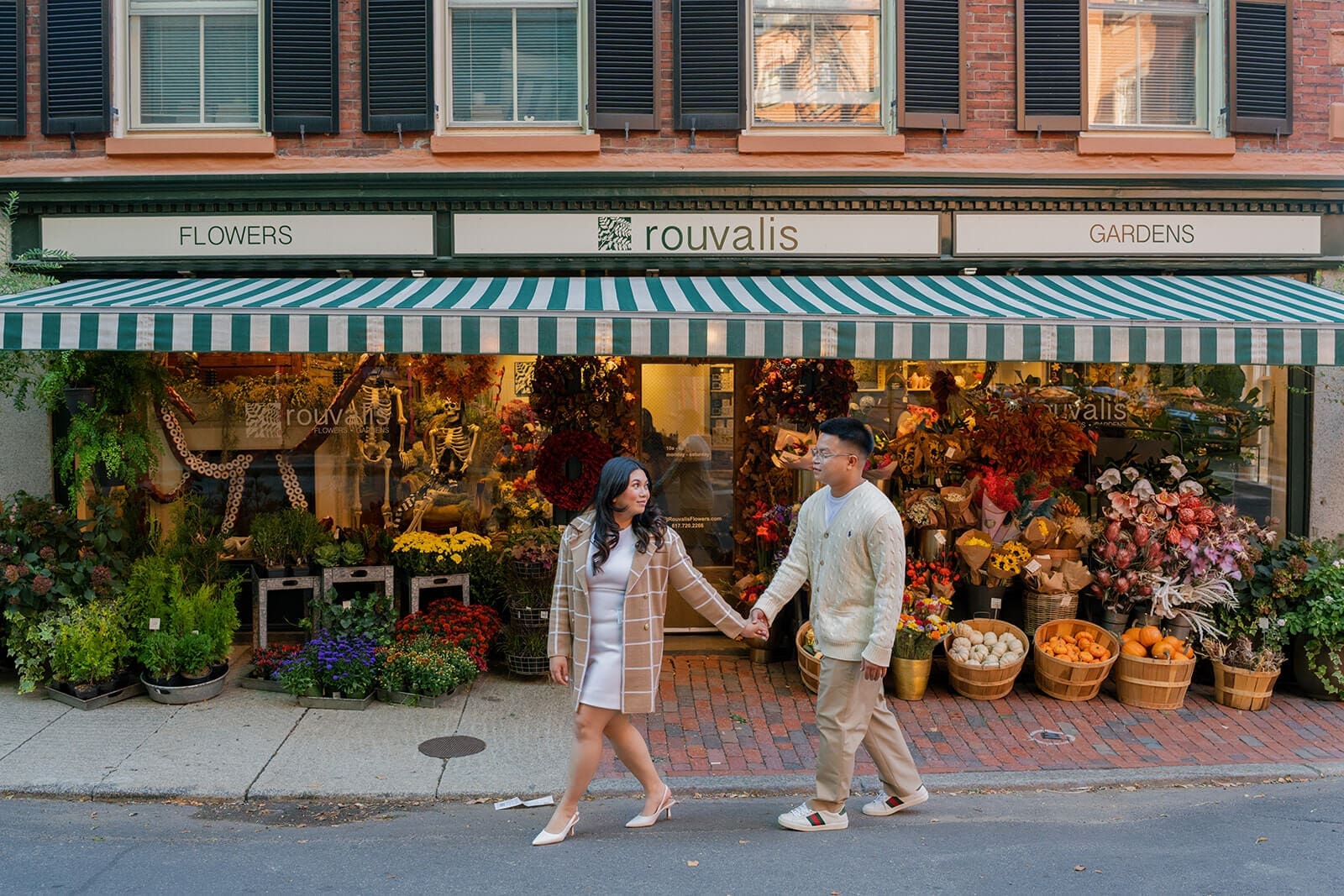
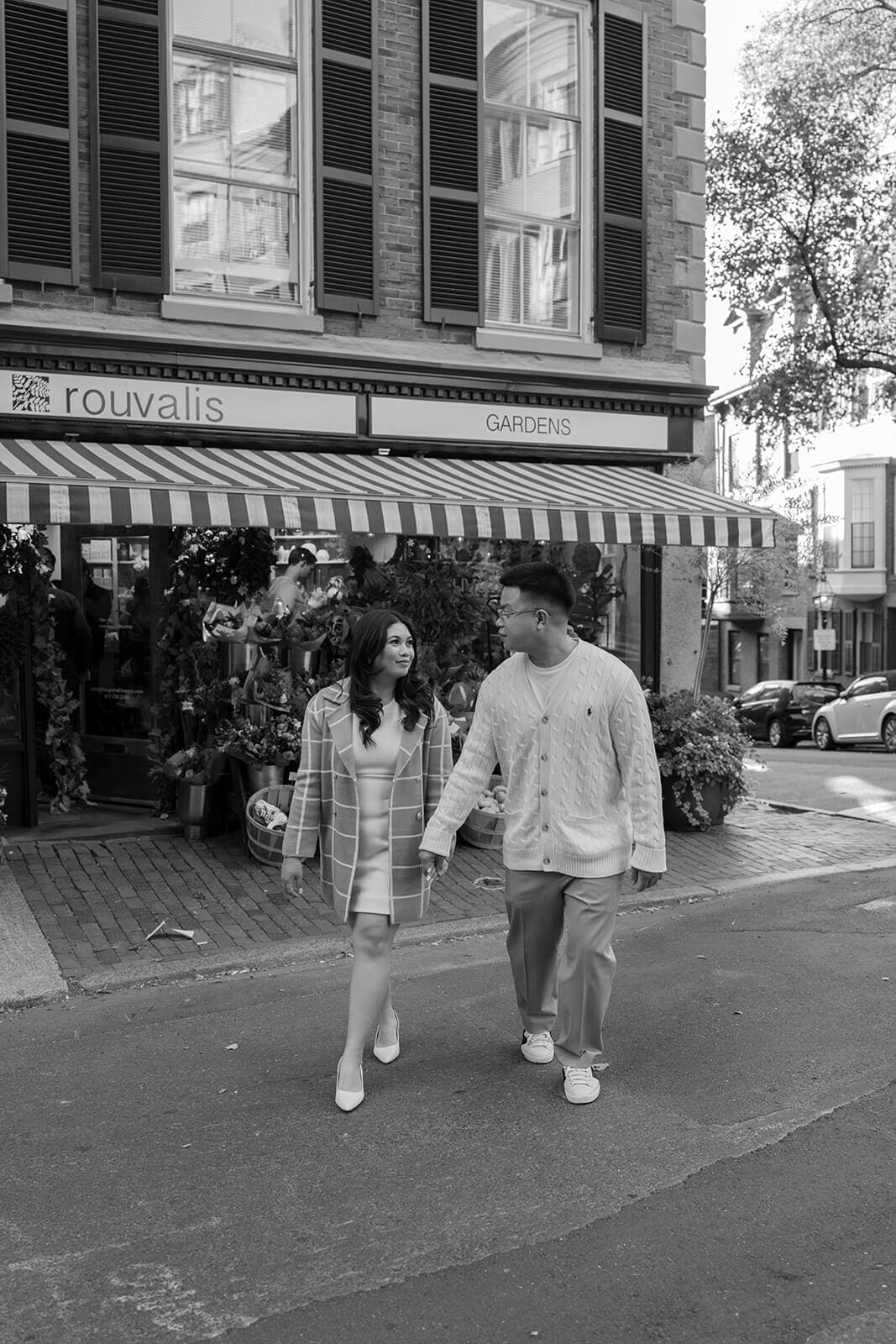
Focus on Your Partner Instead of Performing for the Camera
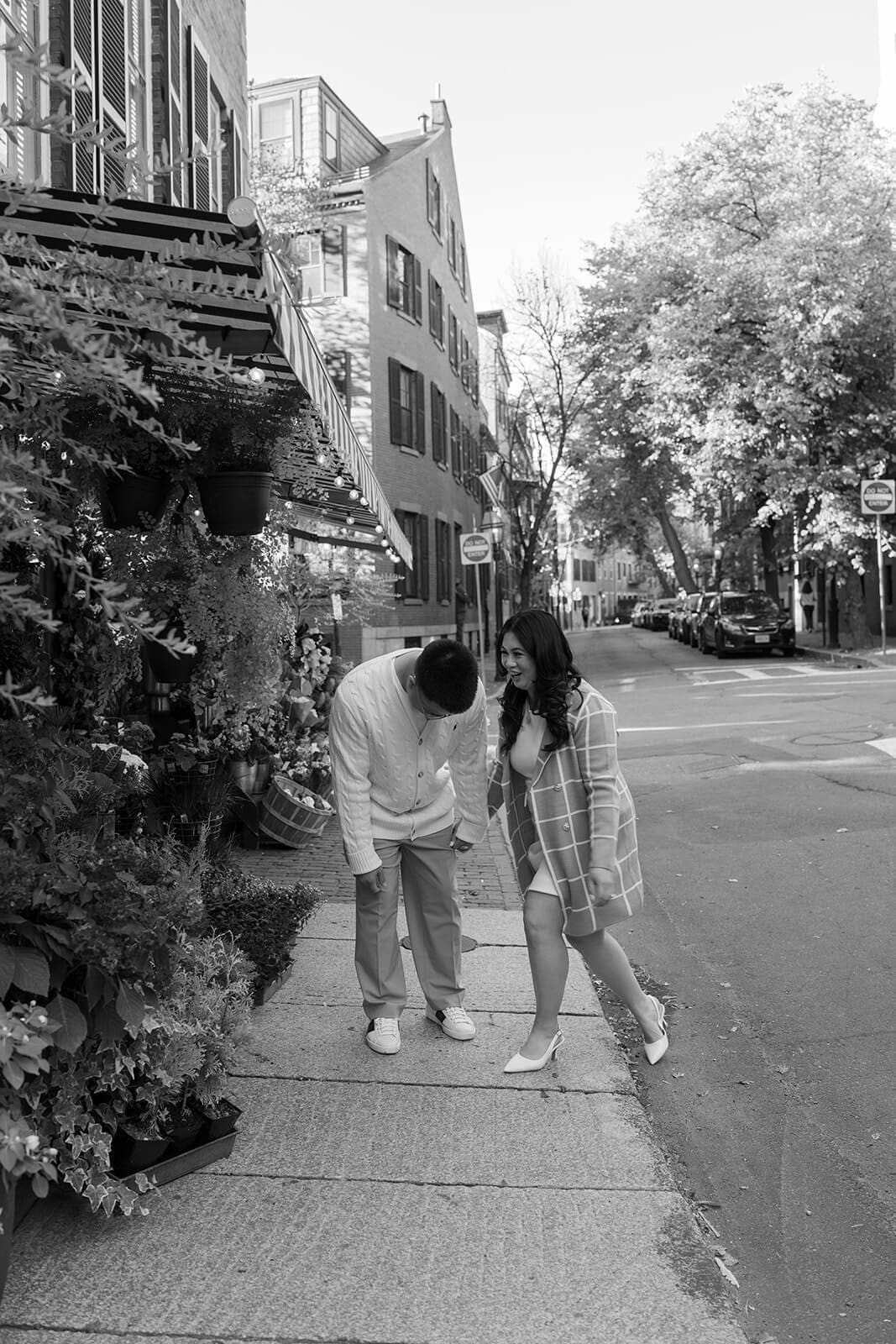
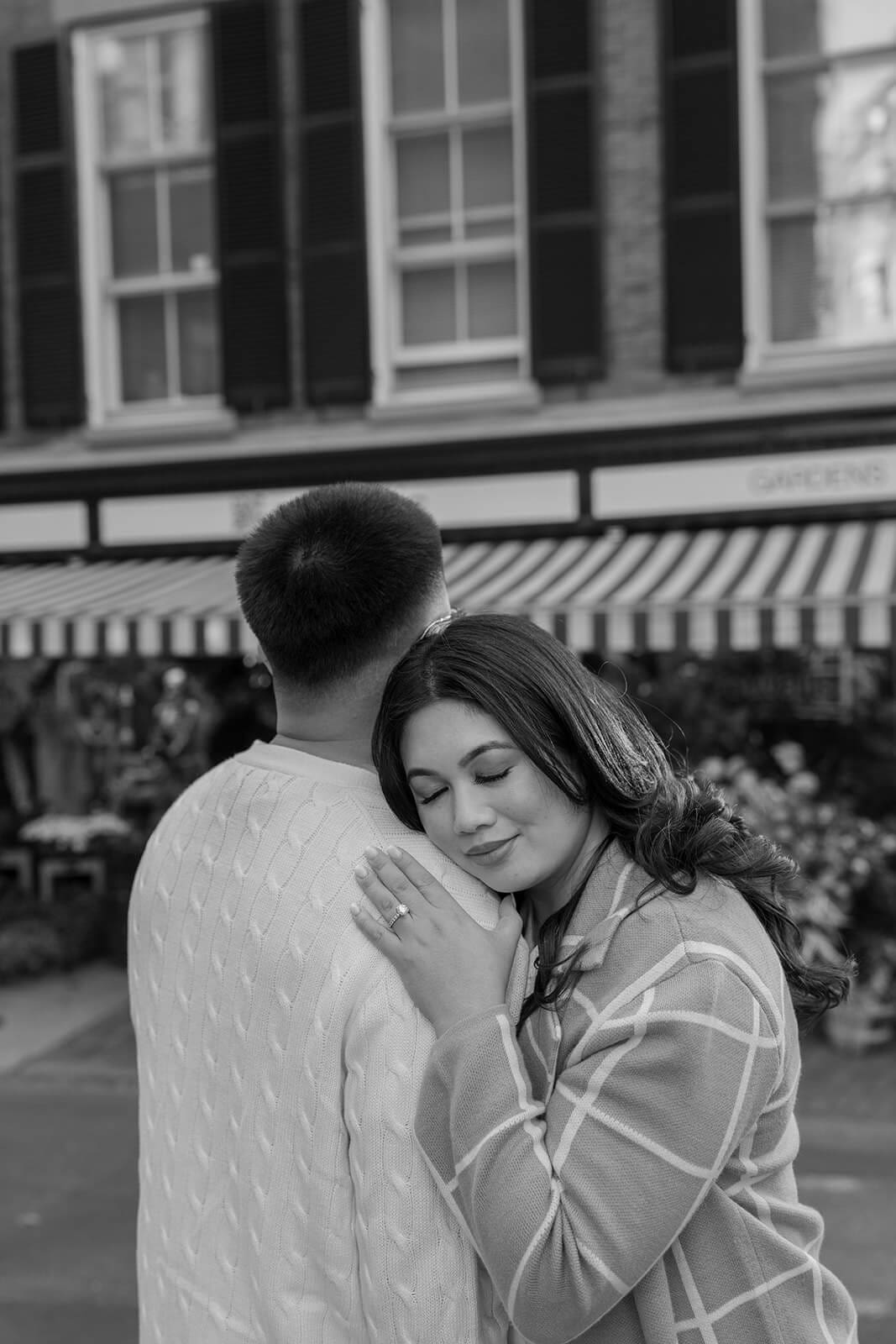
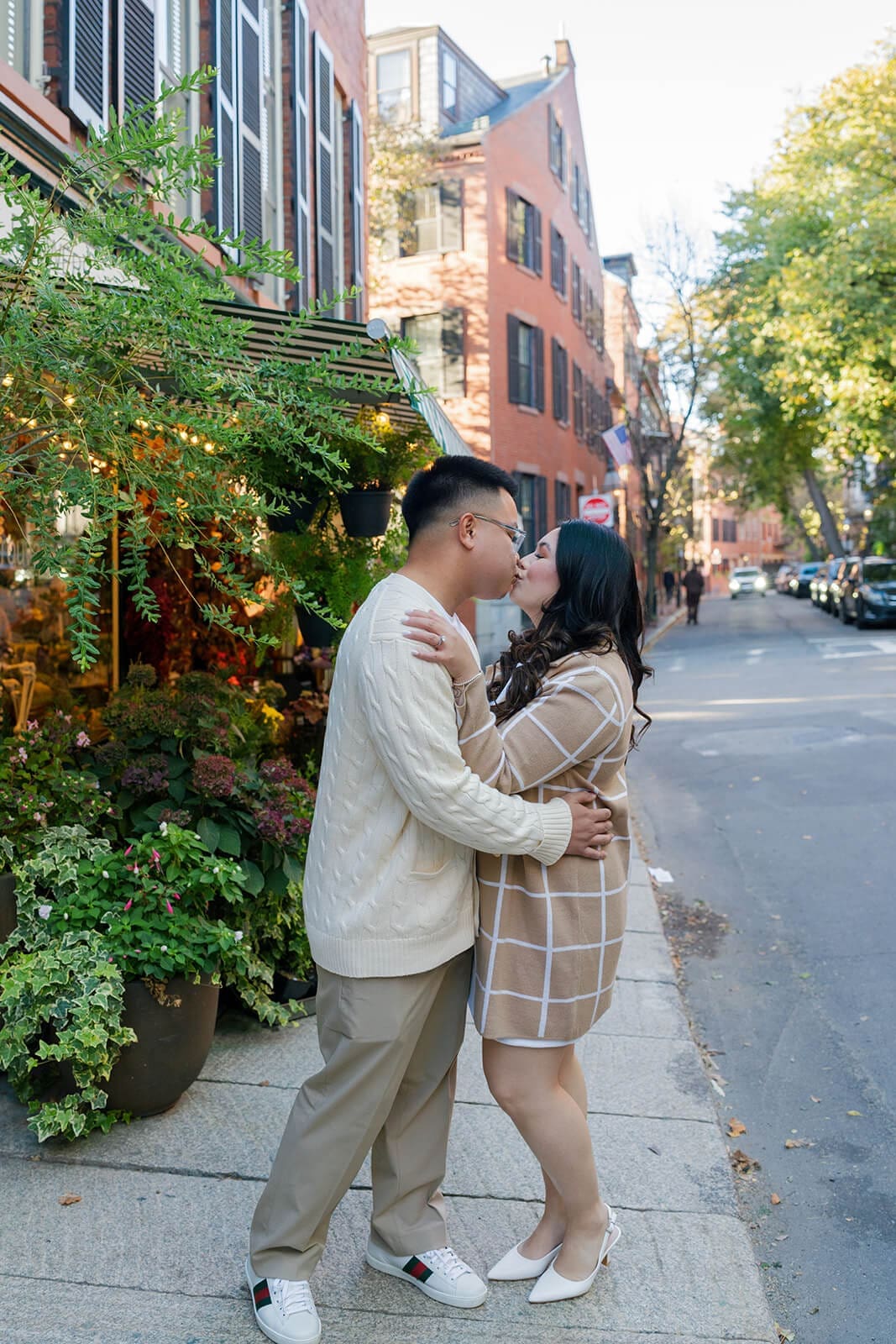
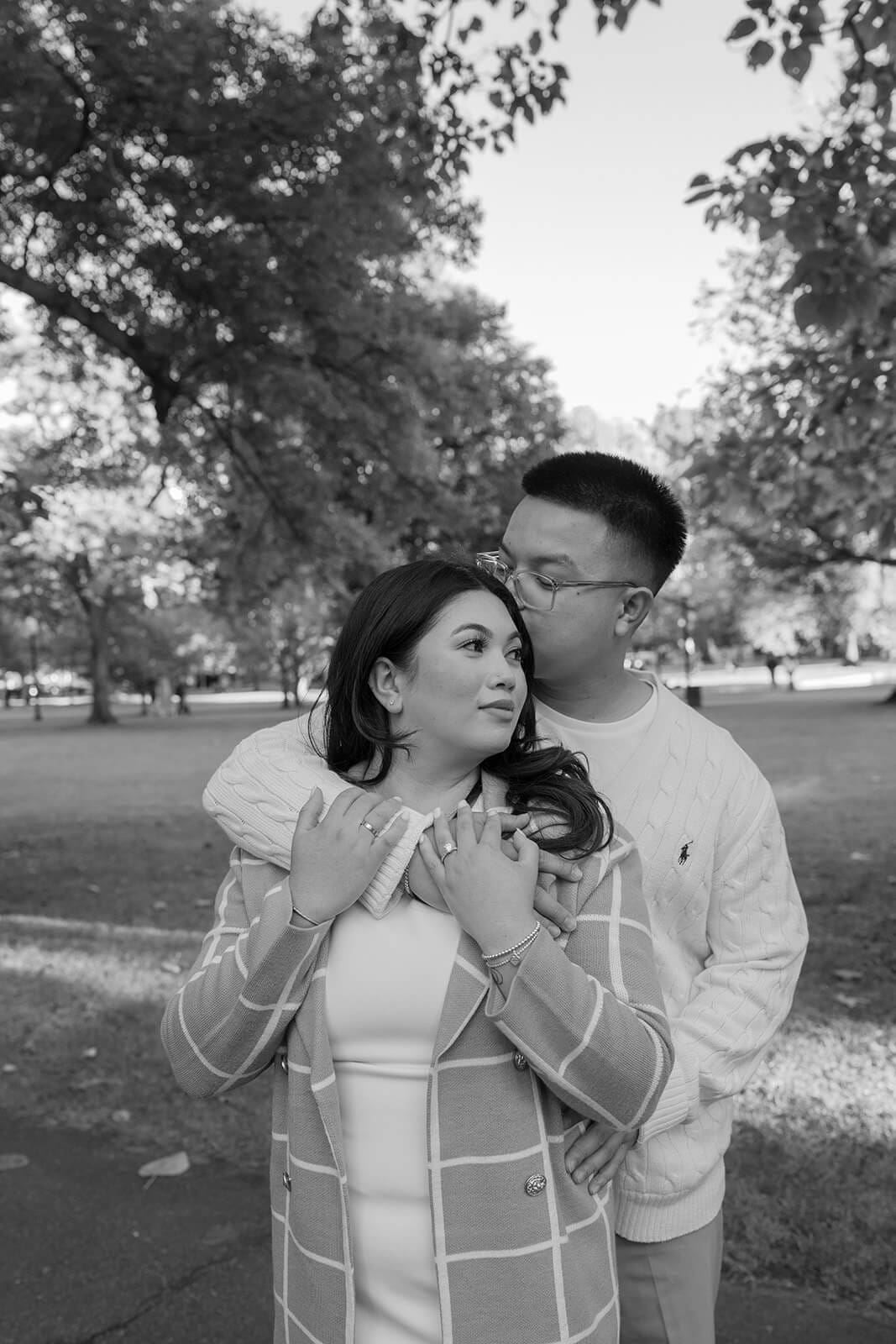
There’s usually a point during a session when couples stop looking over at me after every little movement, like they’re waiting to find out if they did it right. I love that shift because suddenly you’re talking to each other again. One of you laughs at something the other says, someone reaches over to fix a piece of hair, or you naturally move a little closer without thinking about whether it looks good on camera.
I’m still paying attention to what’s happening and giving you direction when it helps, but your attention doesn’t need to stay on me. Once you’re more focused on each other, I can watch the way your body language changes and notice the small reactions that happen in between the instructions. If something needs adjusting, I’ll step in. If what you’re doing already feels good, I’d rather leave it alone and let the moment keep going.
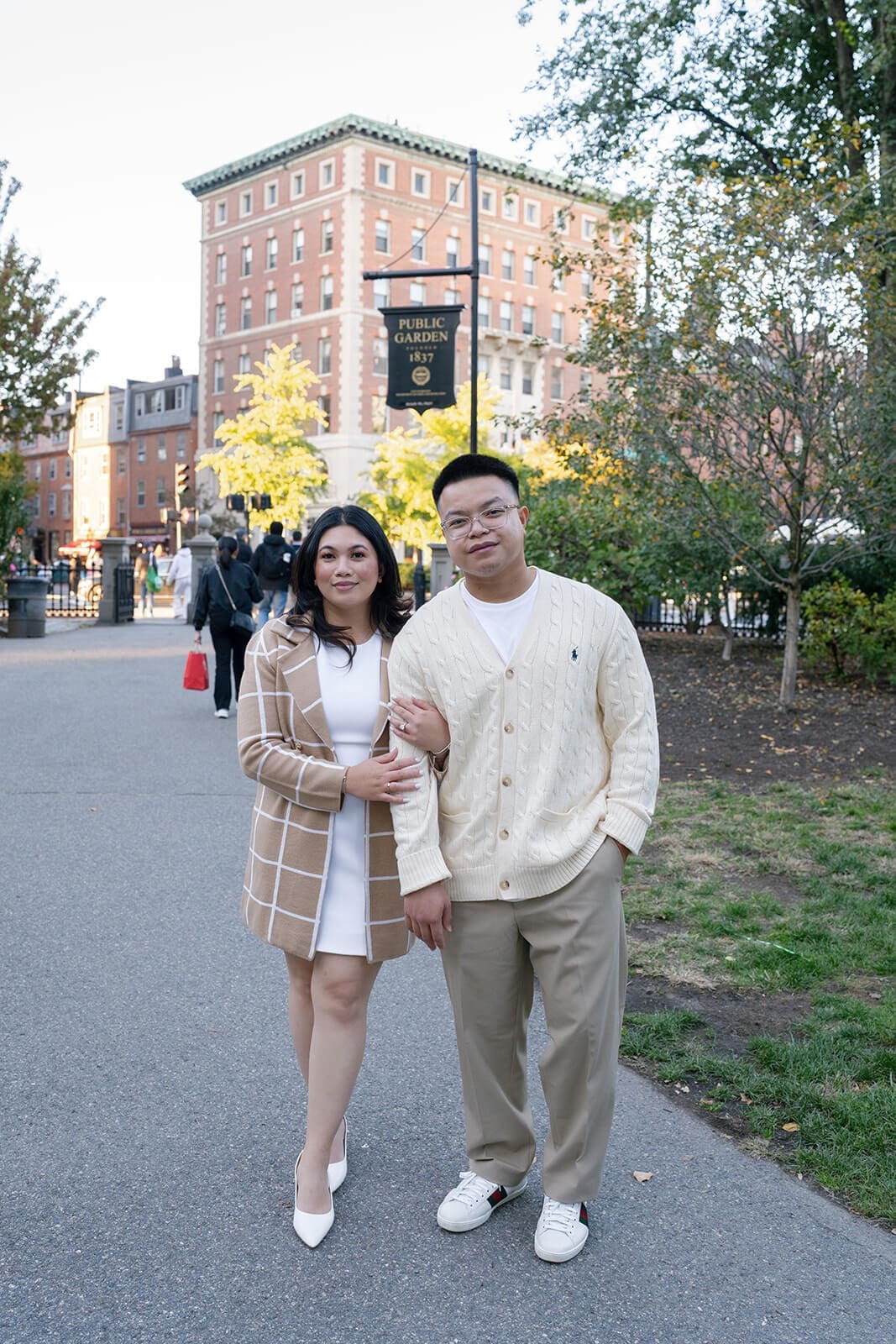
What if I’m Self-Conscious About How I Look in Photos?
If there’s something you tend to feel self-conscious about in photographs, you’re always welcome to tell me before we start. You can keep it as simple as you want. Knowing what’s already on your mind helps me photograph you with a little more awareness instead of having you quietly worry about the same thing throughout the session.
I’ll pay attention to positioning and composition, make small adjustments when they’re helpful, and keep us moving if standing in one place starts making you more aware of yourself. At the same time, I never want the session to become centered around trying to “fix” your body. My goal is to help you feel comfortable enough that you can stay connected to your partner and spend less time wondering how you look from my side of the camera.
Choose a Photographer Whose Direction Style Makes You Comfortable
If you’re nervous about how to pose, pay attention to more than a photographer’s editing style when you’re deciding who to hire. Look at the people throughout their galleries. Do different couples still look like different couples? Can you see personality in the way they stand together or move through a session? I think those details tell you a lot about whether a photographer leaves room for people to settle into themselves instead of working through the same poses every time.
It’s also worth asking what their direction feels like. Documentary photography doesn’t automatically mean you’ll be left alone to figure everything out. I photograph with a documentary eye, but I’m very comfortable stepping in when you need guidance.
The amount of direction I give can change depending on the two of you. Some couples feel better with a little more structure at the beginning, while others settle in quickly once I give them something to do. I’m paying attention to that as much as I’m paying attention to the photographs, so I can adjust the way I work around what helps you feel comfortable.
Why Engagement Sessions Help You Feel More Comfortable Before Your Wedding
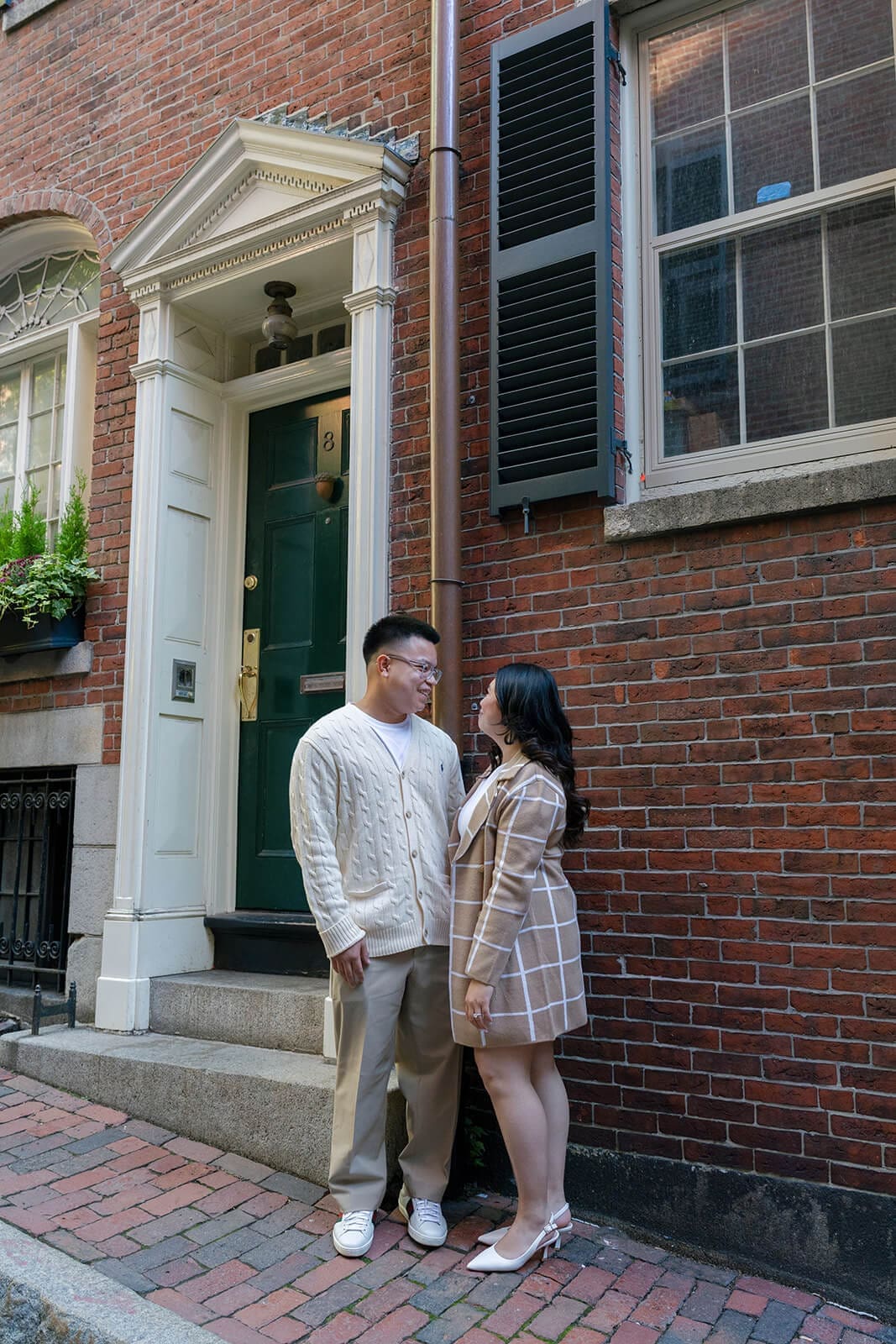
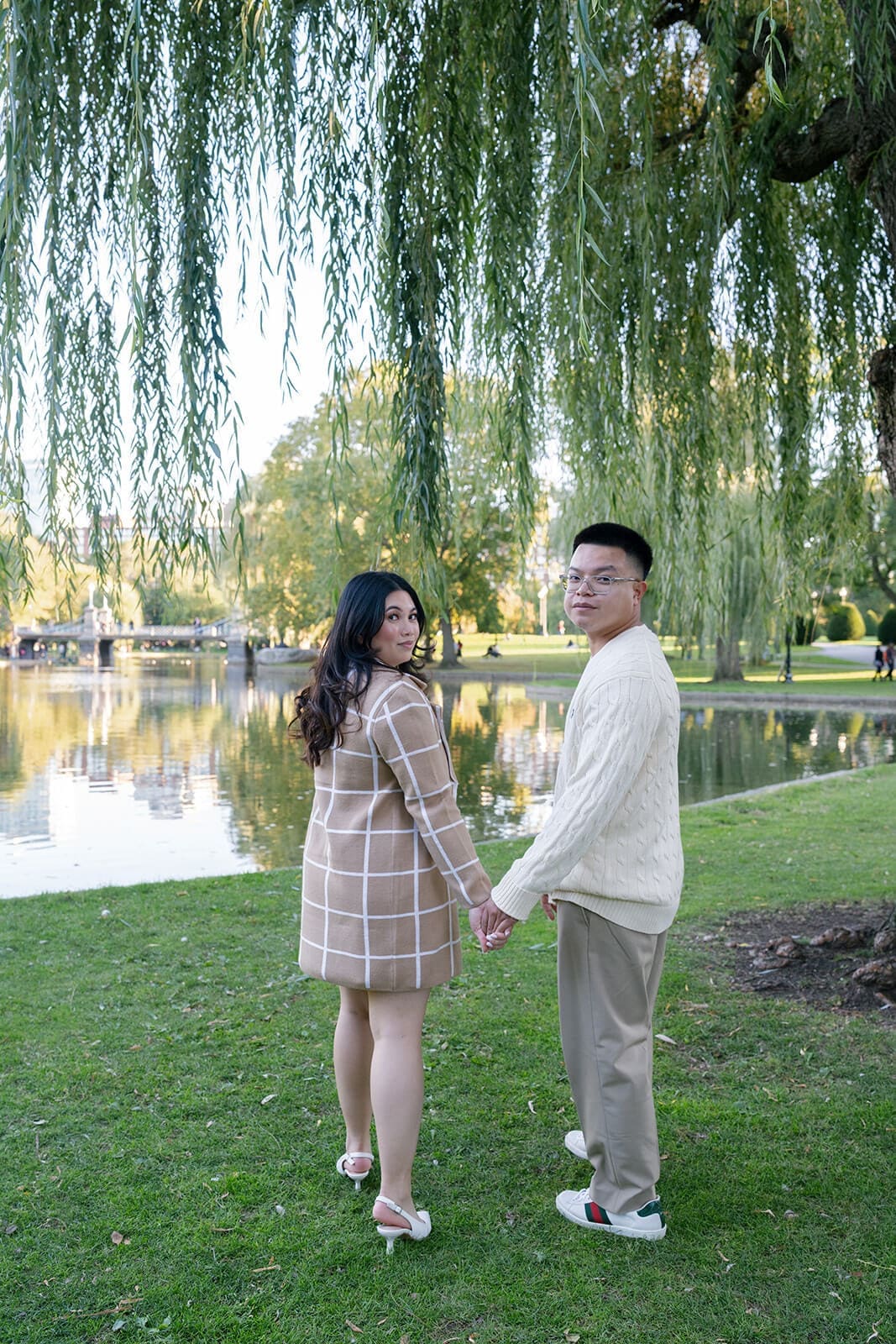
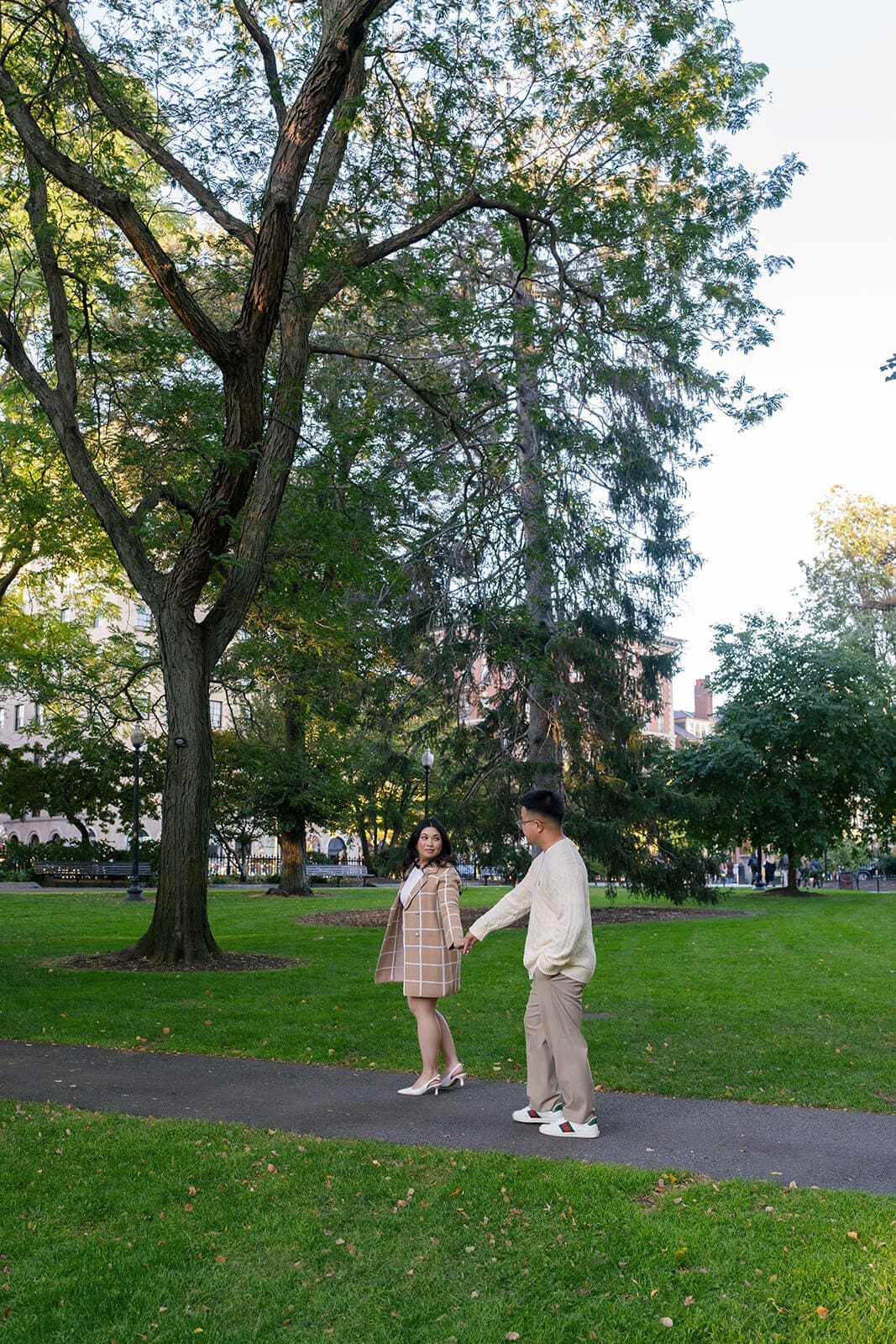
An engagement session can be so helpful if posing makes you anxious. You get to experience what it feels like to be photographed together before your wedding without needing to practice anything ahead of time. It gives us a chance to get comfortable working together, and it gives you a better idea of what my direction feels like when you’re in front of the camera.
I also get to learn more about the two of you during that time. I can see how you communicate, what helps you relax, and when it feels better for me to give you a little more space. That helps me walk into the wedding day already knowing more about how to support you instead of starting from scratch.
By the time your wedding arrives, there’s one less unknown. You already know I’ll guide you when you need it, and I’m not going to leave you wondering what to do. The engagement session gives us that familiarity ahead of time, so photography can feel like one less thing you have to think about once the wedding day is moving. That familiarity is also part of what helps me document candid wedding photos without constantly pulling you out of what’s happening.
What an Engagement Session With Me Actually Looks Like
At the beginning of an engagement session, I’m usually giving you a little more direction while we get used to working together. I’ll find the light I want, give you a comfortable place to start, and make sure you’re not standing there wondering whether you’re supposed to be doing something. You may still feel aware of the camera at first, and that’s completely normal.
As we keep going, I’m watching for the point when the two of you start settling in. Maybe you stop looking over at me after every prompt. One of you reaches for the other without being asked, or your conversation keeps going after I’ve stopped giving instructions. Those little shifts tell me I can step back and give you more room.
By the end of the session, I’ve learned a lot about the way you two move together and what kind of direction helps you feel comfortable. You’ve also had time to see that being photographed doesn’t require you to perform the entire time. That familiarity is a big part of why engagement sessions can make wedding-day portraits feel so much easier.
Your Questions About How to Pose for Photos
Do I need to practice before my session?
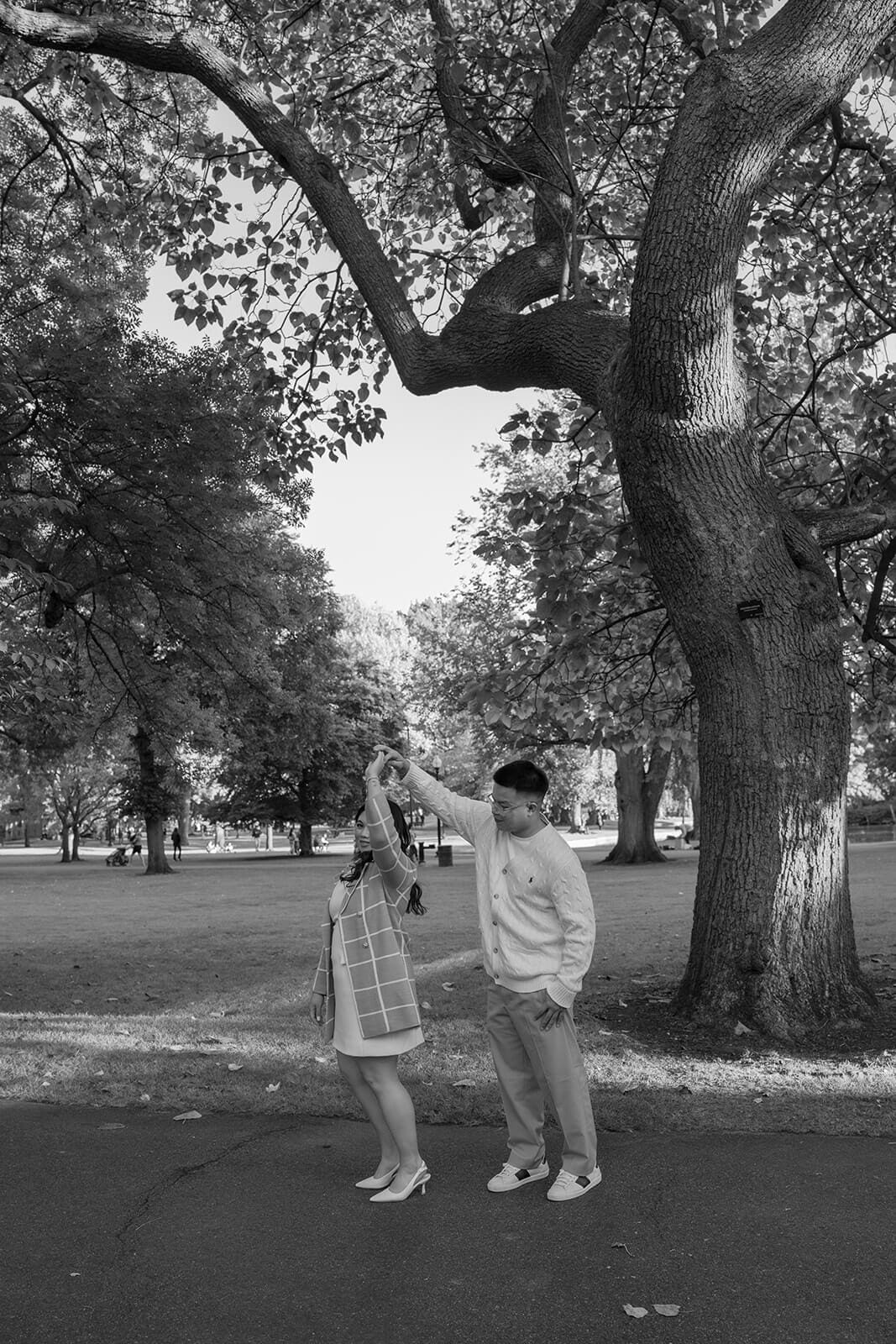
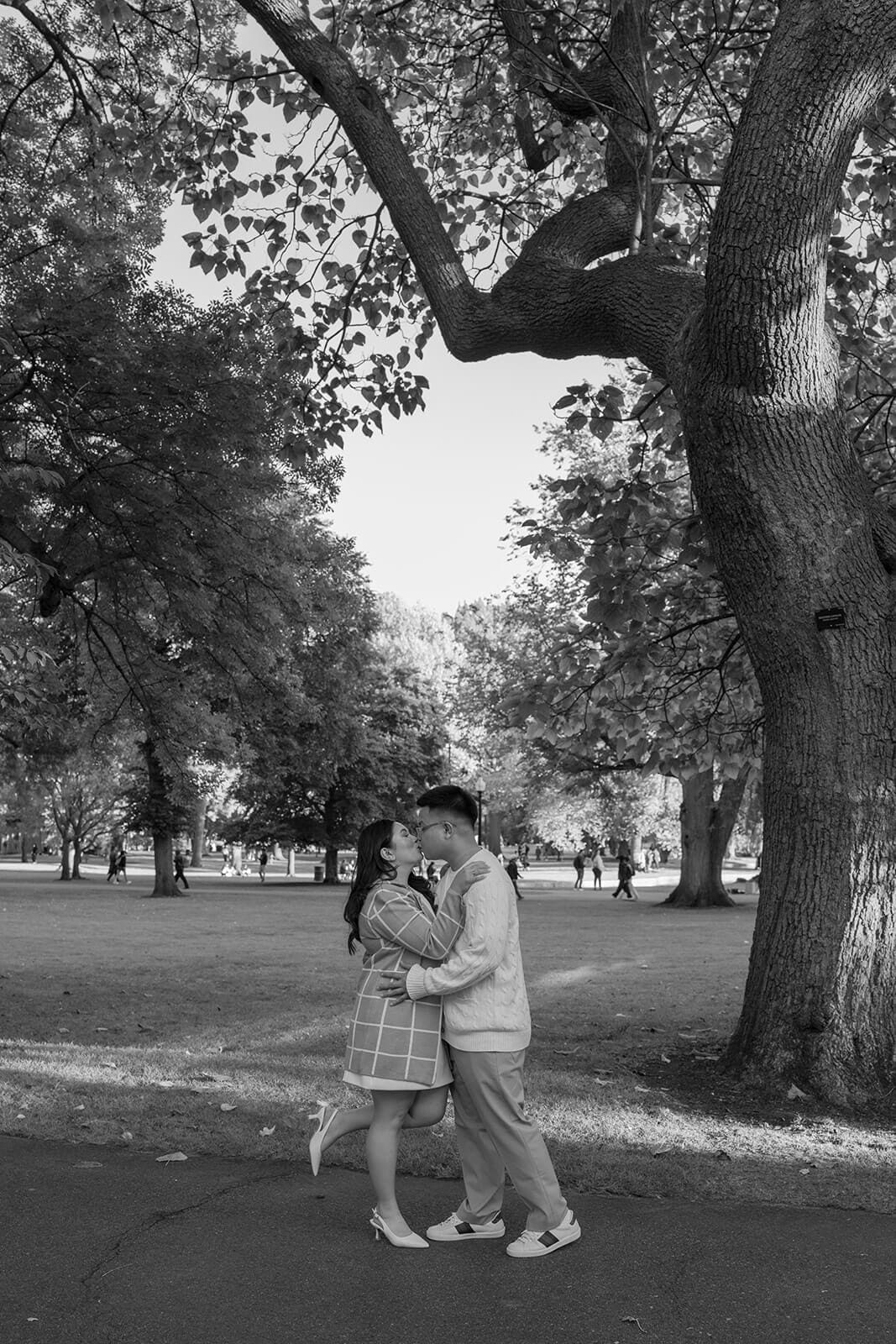
Nope. I don’t expect you to practice poses or arrive knowing where to stand. I’ll give you direction as we go, so you can leave the posing decisions with me and focus on being together.
How can I make natural posing feel less awkward?
Movement usually helps. Instead of holding one position and thinking about what your body is doing, I’ll give you something simple to move through or respond to. Once I see you settling in, I can give you more room and photograph what happens naturally.
Where should I look during photos?
If I want you both looking at the camera, I’ll tell you. Otherwise, your attention can stay on each other or whatever we’re already doing. I’ll keep track of where you’re looking from my side and step in if I want something different.
What if both of us feel awkward in photos?
Tell me. Knowing you’re nervous helps me understand how much direction might feel good at the beginning. Feeling awkward when we start also doesn’t mean your photographs are going to look awkward. Most couples just need a little time to get used to having a camera around.
Should we bring pose inspiration?
You definitely can, but I’m usually more interested in what you like about a photograph than recreating the exact pose. Maybe it’s the movement or how relaxed the couple feels. I can take what you respond to and use it as inspiration without trying to copy someone else’s session.
Will you let me know if something looks awkward?
Of course. If a hand looks tense or a position isn’t photographing the way I want, I’ll make a small adjustment. Once something is working, I’d rather let you settle into it than keep changing things just for the sake of directing you.
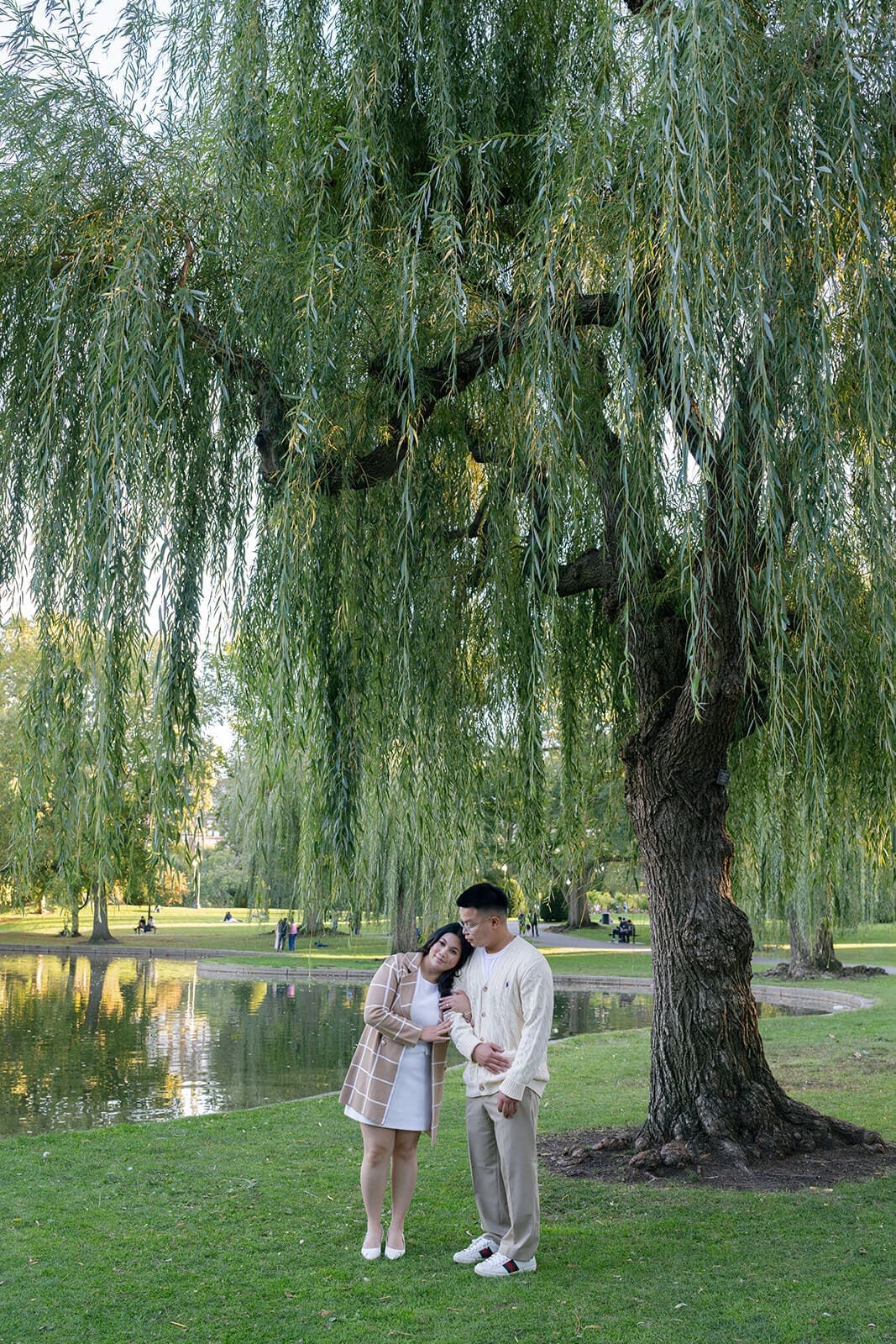
Hire a Boston Wedding Photographer Who Will Guide You Through Posing
If you’ve been worried about how to pose for natural-looking photos, you don’t need to figure everything out before your session. I’ll give you direction when it helps, pay attention to the details you can’t see from your side of the camera, and leave more room once the two of you start settling in.
That’s how I approach both engagement sessions and weddings. If one of you is nervous in front of the camera or convinced you’re going to be the most awkward couple I’ve ever photographed, you can tell me. I’d much rather know what’s making you nervous so I can meet you there than have you spend the whole session trying to look more comfortable than you feel.
More than anything, I want you to leave thinking being photographed felt easier than you expected. When you look back at the photographs, I want you to recognize the way you were together instead of remembering how hard you were trying to get everything right. If that sounds like the kind of experience you want, reach out through my contact form and tell me what you’re planning.

+ Comments